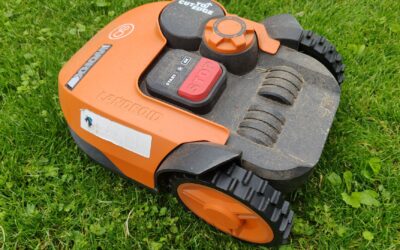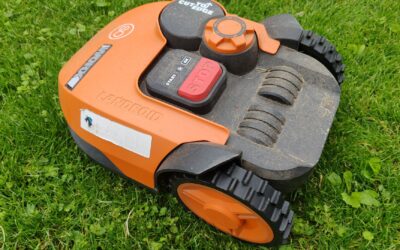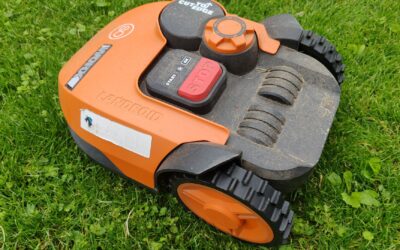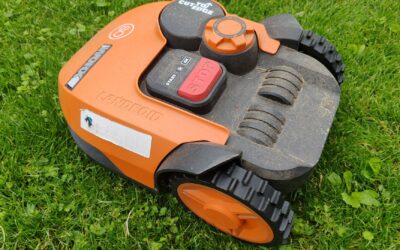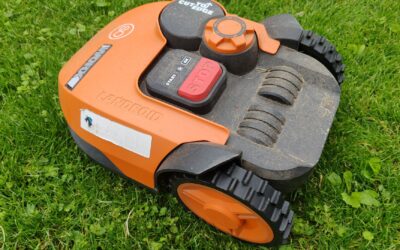
To map a wire free robot mower, you walk the mower around your yard’s perimeter once to record the boundary using its GPS or vision system, then refine the map through the companion app. This initial mapping run tells the mower where your lawn ends and where obstacles like flower beds or driveways begin. Most wire free mowers use real time kinematic (RTK) GPS or camera based visual SLAM to build an accurate map. After the first pass, you can adjust cutting zones, set no go areas, and save the map for future mowing sessions.

Pros
- No boundary wires or RTK base station needed, setup is quick and simple
- Excellent traction and stability on steep slopes up to 80%
- Advanced obstacle detection minimizes collisions and damage
- Comprehensive anti-theft features with free 4G tracking
- Precise edge trimming reduces manual rework
Cons
- Heavier than many competitors at 52 pounds, may be difficult to move manually
- Requires cellular 4G coverage for anti-theft and tracking features
- Initial investment is high compared to wired robotic mowers
The MOVA LiDAX Ultra 2000 AWD is a cutting-edge wire-free robotic lawn mower designed for homeowners with medium-sized lawns up to 0.5 acre. It eliminates the hassle of installing boundary wires or RTK base stations by using a 360° 3D LiDAR and AI dual vision system that creates centimeter-accurate maps automatically.
Standout features include all-wheel drive with four 116W hub motors that handle slopes up to 80% and wet grass without getting stuck. The floating cutting discs and advanced suspension system ensure a clean cut on uneven terrain. Obstacle avoidance is top-notch, detecting over 300 objects like toys, pets, and garden furniture.
Build quality is robust, with a 52-pound steel and plastic construction. The dual-disc cutting deck uses 12 blades and a 15.8-inch cutting width, powered by a 36V 243Wh battery that covers 0.25 acre per charge. The Edge-Riding technology leaves only 1.2 inches of uncut grass along boundaries.
Potential drawbacks include the mower's heavy weight, which may make manual handling tedious. The anti-theft system relies on 4G cellular coverage, so remote areas without signal could limit that feature. Additionally, the high price point positions it as a premium investment.
Overall, the MOVA LiDAX Ultra 2000 AWD delivers exceptional performance, convenience, and security for those willing to invest in a top-tier robotic mower. Its wire-free setup, powerful AWD, and intelligent mapping make it a standout choice for complex lawns.
Dimensions: 29 x 21 x 12 inches
Weight: 52 pounds
Battery: 36V 243Wh Li-ion
Cutting Width: 15.8 inches
Cutting Height: 1.2 to 3.9 inches (adjustable)
Blades: 12 razor-sharp blades
Slope Capability: Up to 80%
Obstacle Clearance: 2.4 inches
Navigation: 360° 3D LiDAR + AI dual vision, RTK-free
Connectivity: 4G (3 years free), Wi-Fi
Max Area per Charge: 0.25 acre
Warranty: 3 years
Pros
- No wires or RTK base station required, reduces installation hassle
- Excellent slope handling up to 80% and all-terrain capability
- Advanced obstacle detection with AI learning for safety
- Edge cutting precision leaves only 1.2 inches of uncut grass
- Built-in 4G with 3-year free subscription for anti-theft tracking
Cons
- Battery covers only 0.25 acre per charge; larger lawns require multiple recharge cycles
- No user reviews yet, so real-world reliability is unproven
- Heavy at 52 pounds, making manual handling or relocation difficult
The MOVA LiDAX Ultra 3000 AWD is a top-tier robotic lawn mower designed for homeowners who want a completely wire-free, hands-off mowing experience. With its 360-degree 3D LiDAR and AI dual-vision system, it maps your yard with centimeter precision and avoids over 300 obstacles, including pets and garden furniture. This mower is best suited for medium to large lawns up to 0.75 acre with slopes, uneven terrain, or thick grass, where traditional wire-bound mowers struggle.
Standout features include all-wheel drive with four high-torque motors that handle slopes up to 80% and obstacles up to 2.4 inches without getting stuck. The floating cutting deck adapts to uneven ground, while the UltraTrim 2.0 edge technology leaves only 1.2 inches of uncut grass along borders, reducing manual trimming. The dual-disc system with 12 blades and a 15.8-inch cutting width delivers efficient mowing, and the mower automatically returns to charge, covering the full 0.75 acre over multiple cycles.
Build quality is robust with a 52-pound chassis and advanced suspension for stability on slopes. The included 3-year free 4G connectivity provides real-time GPS tracking and anti-theft protection with PIN locking, a rare and valuable security feature. The smart app allows dual mapping, zone-specific schedules, and cutting height adjustment from 1.2 to 3.9 inches, giving you full control over lawn care.
Potential drawbacks include the high price point, which may be a barrier for some buyers. Also, the battery only supports up to 0.25 acre per charge, so larger properties will require multiple recharge sessions. As a newly launched product with no reviews yet, its long-term reliability is unconfirmed. The heavy weight (52 lbs) can make repositioning or storage cumbersome.
Overall, the MOVA LiDAX Ultra 3000 AWD is an innovative, feature-rich robotic mower that eliminates the hassle of wires and base stations. If you have a complex, sloped lawn and value cutting-edge technology with strong security, this mower is a worthwhile investment despite its premium cost and battery range limitations.

Pros
- No boundary wires or RTK base station required, incredibly easy to set up and move between lawns.
- AWD and advanced suspension provide excellent traction on steep slopes and uneven terrain.
- Exceptional obstacle avoidance with LiDAR and AI reduces the risk of collisions with pets and toys.
- Precise edge cutting minimizes manual touch-up around flower beds and fences.
- Robust anti-theft features with 4G tracking and PIN lock offer peace of mind.
Cons
- Battery life covers only 0.25 acre per charge, so larger lawns may require mid-cut recharging or multiple sessions.
- No user reviews yet, so real-world long-term reliability is not confirmed.
- Premium price point may be a barrier for budget-conscious buyers.
The MOVA LiDAX Ultra 2000 AWD is a high-tech robotic lawn mower designed for homeowners who want a truly hands-off mowing experience without the hassle of installing boundary wires or RTK base stations. It targets properties up to half an acre with challenging terrain, including steep slopes and irregular shapes, making it ideal for those who need robust all-terrain performance.
Its standout feature is the combination of 360-degree 3D LiDAR and AI dual vision, which allows it to map your lawn with centimeter-level accuracy and avoid over 300 different obstacles. The system works right out of the box: simply power on the mower and it autonomously creates a detailed map and begins cutting. The AWD system, with four high-torque hub motors, handles slopes up to 80 percent and keeps the mower stable on thick, wet grass, thanks to an advanced suspension that prevents tipping.
The cutting deck uses dual discs with 12 blades and a 15.8-inch width, providing efficient mulching and a clean cut. Cutting height adjusts from 1.2 to 3.9 inches via the app, catering to various grass types. Edge trimming is precise: UltraTrim 2.0 reduces uncut grass along borders to just 1.2 inches, minimizing manual finishing. The mower runs on a 36V 243Wh battery, covering about 0.25 acre per charge before automatically returning to its charging station and resuming.
Build quality feels premium, with a durable chassis and 4G connectivity included free for three years for anti-theft tracking and alerts. The app provides full control over dual maps, zones, schedules, and cutting height. However, the listed 0.5-acre coverage requires at least one recharge or multiple sessions, which could extend total mowing time for larger lawns. Additionally, as a new product with zero reviews, long-term reliability remains unverified.
Overall, the MOVA LiDAX Ultra 2000 AWD is an impressive, feature-rich robotic mower that prioritizes convenience, safety, and precision. Its wire-free setup and advanced navigation set it apart from many competitors, though its premium price and battery range may limit its appeal to those with smaller or moderately sized lawns. If you value cutting-edge technology and minimal manual intervention, this mower is a strong contender.
Pros
- No boundary wires or RTK base station needed, saving installation time and cost.
- Exceptional slope handling (up to 80%) and all-terrain capability with AWD.
- Advanced obstacle avoidance system detects 300+ objects for safe operation.
- Ultra-precise edge cutting leaves minimal untrimmed grass.
- Includes 3-year free 4G connectivity and anti-theft tracking.
Cons
- No user reviews yet, so real-world performance is unverified.
- Limited to 0.25 acre per charge, requiring multiple sessions for larger lawns.
The MOVA LiDAX Ultra 3000 AWD is a wire-free, RTK-free robotic lawn mower designed for homeowners with complex, sloped lawns up to 0.75 acre. It uses a combination of 360° 3D LiDAR and AI dual vision to map your yard with centimeter accuracy and navigate autonomously. This premium mower is ideal for those who want a truly hands-off experience without the hassle of installing boundary wires or RTK base stations.
Standout features include all-wheel drive with four high-torque hub motors, enabling it to handle slopes up to 80% and obstacles up to 2.4 inches. The dual-disc cutting system with 12 blades and a 15.8-inch width delivers efficient mowing, while UltraTrim 2.0 technology leaves only 1.2 inches of uncut grass along edges. The mower's intelligent obstacle detection system recognizes over 300 objects, including pets and toys, ensuring safe operation in your yard.
Build quality is robust with a 52-pound chassis and advanced suspension to prevent tipping on uneven ground. The floating cutting discs adapt to terrain contours for a consistent cut. The app control is comprehensive, allowing you to create dual maps, manage multiple zones, set schedules, and adjust cutting height from 1.2 to 3.9 inches. Anti-theft features include 3 years of free 4G connectivity for real-time tracking and PIN lock.
A potential drawback is that the mower covers only 0.25 acre per charge, so larger lawns may require multiple sessions or a secondary unit. Additionally, with no user reviews available, long-term reliability is unproven. The premium price tag may also deter budget-conscious buyers.
Overall, the MOVA LiDAX Ultra 3000 AWD is a cutting-edge robotic mower that excels in convenience and performance for complex lawns. Its wire-free setup, excellent slope handling, and advanced safety features make it a top choice for tech-savvy homeowners. If you're willing to invest in premium lawn care automation, this mower delivers impressive results.
Product Dimensions: 29 x 21 x 12 inches
Weight: 52 pounds
Cutting Width: 15.8 inches
Cutting Height Range: 1.2 to 3.9 inches
Battery: 36V 243Wh
Coverage per Charge: Up to 0.25 acre
Max Slope: 80%
Connectivity: 4G (3 years free), Wi-Fi, Bluetooth
Mapping: 360° 3D LiDAR + AI Dual Vision
Obstacle Detection: 300+ objects
Edge Trim: Leaves 1.2 inches uncut
Warranty: 3 years

Understanding Wire Free Navigation Technology
Wire free robot mowers rely on satellite positioning or visual recognition to navigate. RTK GPS provides centimeter level accuracy by using a base station and a rover on the mower. Vision based systems use cameras and sensors to recognize landmarks and edges. Some mowers combine both technologies for reliability.
Knowing which technology your mower uses helps you understand its mapping limitations. GPS works best in open skies, while vision systems can handle covered areas but may struggle in low light. Check your mower’s specifications to see what it supports.
Preparing Your Yard for the Mapping Process
Before mapping, clear your lawn of toys, tools, and debris. Mow the grass shorter than usual so the mower can roll smoothly. Remove any temporary obstacles like hoses or garden stakes that could confuse the sensors.
Check for areas with poor GPS reception, such as near tall fences or dense tree cover. If your mower uses RTK GPS, ensure the base station has a clear view of the sky. A well prepared yard reduces mapping errors and saves time.
Performing the Initial Mapping Run for Your Wire Free Robot Mower
Start the mapping process by activating the mapping mode in your mower’s app. Walk the mower slowly around the entire boundary of your lawn, keeping it at a steady pace. The mower records its path and builds a digital outline of your yard.
If your mower supports automatic mapping, you can let it drive itself the first time, but manual guidance often gives better results. Complete a full loop without gaps. Once the boundary is saved, the app will show the map on your phone.
Creating No Go Zones and Boundaries
After the initial map is created, use the app to mark areas you want the mower to avoid. These no go zones can include flower beds, garden ponds, or children’s play areas. Simply draw a polygon on the map around each zone.
Some mowers let you set virtual boundaries for driveways or paths. You can also adjust the cutting area to exclude steep slopes or rough terrain. Save these settings so the mower remembers them for every mow.
Fine Tuning the Map Over Time
Your yard changes with the seasons. New flower beds, garden furniture, or tree growth can affect the mower’s navigation. Periodically review the map in the app and update no go zones or boundaries as needed.
If the mower starts missing edges or entering restricted areas, remap the boundary. Many mowers allow you to edit the map without a full remap. A few minutes of fine tuning each month keeps the mower working accurately.
Troubleshooting Signal and Accuracy Issues
GPS signal loss is a common problem in wire free mowing. Tall buildings, dense trees, or heavy cloud cover can degrade accuracy. If the mower drifts or stops, check the base station placement and ensure it has an unobstructed sky view.
Vision based mowers may have trouble in low light or after heavy rain when the ground looks different. Clean the camera lens regularly. If problems persist, consider relocating the base station or trimming overhanging branches.
How to Fix Common Mapping Problems
- Ensure the base station has a clear view of the sky for reliable GPS.
- Walk the boundary slowly and steadily during the initial mapping run.
- Remove obstacles and mow grass short before mapping.
- Update no go zones in the app after any yard changes.
- Clean sensors and cameras regularly to maintain accuracy.
- Remap if the mower consistently misses edges or enters restricted areas.
Following these steps will help you get a clean, accurate map. For more detailed guidance on setting up and maintaining your wire free robot mower, explore the articles on our blog.
Related Guides
Frequently Asked Questions
How long does it take to map a wire free robot mower?
The initial mapping run usually takes 15 to 30 minutes for an average sized yard. Walking the boundary at a steady pace is the most time consuming part. Editing zones and saving the map adds a few more minutes.
Can I map my yard without a smartphone?
Most wire free robot mowers require a smartphone app for mapping. The app lets you draw boundaries, set no go zones, and save the map. Some mowers have a control panel on the unit, but the app is the primary tool.
Do I need to remap if I change my yard layout?
Yes, if you add a new flower bed, install a fence, or change the lawn shape, you should update the map. Many apps allow you to edit the existing map without a full remap. For major changes, a new mapping run is best.
What happens if the mower loses GPS signal during mapping?
If the mower loses GPS signal, it may stop or drift off course. The app usually shows a signal strength indicator. Move the base station to a more open location or trim nearby trees to improve reception before remapping.
Can I map multiple zones with one mower?
Many wire free mowers support multiple zones. You can map each area separately and save them as different maps. The mower can then be moved between zones, and it will navigate each area using its saved map.
Understanding how to map a wire free robot mower is the first step to hands off lawn care. For more detailed guides, check our blog.