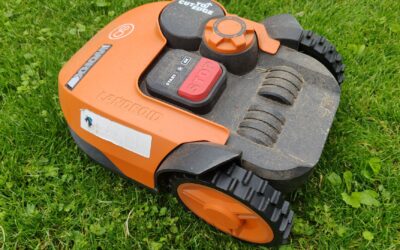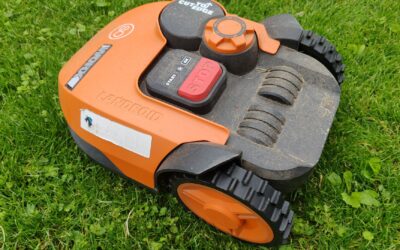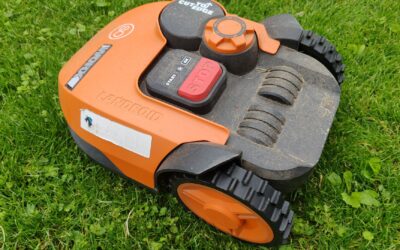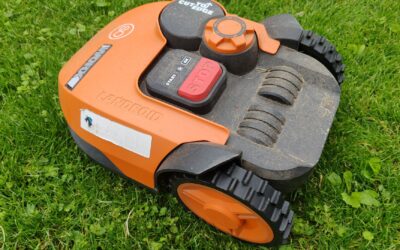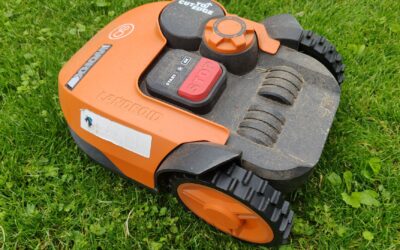
A robot lawn mower does not need WiFi to work. Most models can cut your grass perfectly fine using only their boundary wire and onboard controls. WiFi is an optional feature that adds convenience, such as remote control from your phone, automatic schedule adjustments, and firmware updates. Whether you need WiFi depends on how much control and automation you want. If you prefer a simple “set it and forget it” approach, a non-WiFi model will serve you well. If you want to start, stop, or monitor your mower from anywhere, then WiFi becomes valuable.

Pros
- Truly wire-free setup: no boundary wires or lawn mapping needed, saving hours of installation time.
- Advanced AI obstacle avoidance: reliably detects and avoids people, pets, and objects for safe autonomous mowing.
- Self-leveling deck: mows smoothly over uneven ground, tree roots, and stepping stones without getting stuck.
- Night mowing capability with included headlights: allows quiet operation at any hour.
- Over-the-air software updates: the mower keeps improving over time.
Cons
- Requires a clear line of sight to the sky for GPS-free navigation, which may be limited in heavily shaded areas.
- The camera-based system may struggle in dense fog or heavy rain, though it returns to base in wet conditions.
- Higher upfront cost compared to some wired robotic mowers, but eliminates the need for boundary wire installation.
The WORX Landroid Vision WR220 is a wire-free robotic lawn mower designed for homeowners with medium to large yards up to 1/2 acre. It uses AI deep learning and an HDR camera to identify grassy areas and navigate without boundary wires or lawn mapping. This makes it ideal for those who want a hassle-free setup and a truly autonomous mowing experience.
Standout features include intelligent obstacle avoidance that instantly detects people, pets, and objects, ensuring safe operation. The self-leveling deck handles uneven terrain, tree roots, and stepping stones without getting stuck. Automatic scheduling through the Landroid App lets you customize mowing times, cutting heights, and multi-zone management. The included FiatLux headlights enable quiet night mowing, and over-the-air updates keep the mower improving over time.
Design and build quality are solid, with a robust 34.8-pound chassis and a 20V 5.0Ah battery. The mower cuts fine clippings to nourish the lawn, and it automatically returns to its base if it detects rain. The magnetic strip barriers provide simple boundary control for areas you want to exclude.
Potential drawbacks include the camera system's reliance on good lighting; it may struggle in dense fog or heavy rain, though it returns to base in wet conditions. Also, the higher upfront cost may be a consideration, but it eliminates the need for expensive boundary wire installation.
Overall, the WORX Landroid Vision WR220 is a top-tier choice for tech-savvy homeowners who want a wire-free, safe, and intelligent mowing solution. Its AI-driven navigation and obstacle avoidance set a new standard for convenience and peace of mind.

Pros
- Zero installation hassle: no perimeter wire, just place the dock and start mowing
- Efficient optical navigation works in varied daylight conditions
- Obstacle avoidance prevents collisions with small objects and lawn furniture
- Easy no-go zone setup with magnetic strips, no wiring required
- Automatic charging and resume mowing for continuous lawn care
Cons
- Only operates during daylight hours due to optical navigation (no night mowing)
- Requires clearly defined lawn edges for best results; edges may need adjustment
- Limited to 1/6 acre coverage; larger lawns may need extra batteries or multiple units
The LawnMaster OcuMow VBRM701YAMIDF is a wire-free robot mower designed for lawns up to 1/6 acre. It uses optical navigation and a wide-angle camera to guide itself, making setup nearly instant: just place the charging dock and start mowing.
Standout features include ultrasonic obstacle avoidance (detects objects as small as 6 inches), virtual no-go zones via magnetic strips, and automatic return to the charging station after a 2-hour recharge. The Drop-N-Mow mode allows up to 3 hours of runtime for secondary areas without a dock.
Build quality is solid with deep tread wheels that climb slopes up to 35%. The mower is relatively heavy at 31.5 pounds, but the robust drive system handles complex terrains. However, it only works in daylight, which protects nocturnal wildlife but limits flexibility.
Drawbacks include the need for clearly defined lawn edges and the small coverage area. For larger properties, you may need extra batteries or multiple units. The price is competitive for a wire-free model with these features.
Verdict: The LawnMaster OcuMow is an excellent choice for homeowners with small, well-defined lawns who want easy setup and smart navigation. Its obstacle avoidance and no-go zones add convenience, while the daylight-only operation is a minor trade-off for eco-conscious users.

Pros
- Wire-free setup saves time and avoids unsightly perimeter wires.
- RTK+Vision navigation works reliably in challenging garden layouts.
- AI obstacle detection enhances safety and protects your mower.
- Multi-zone management lets you customize mowing for different areas.
- Quiet operation suitable for noise-sensitive environments.
Cons
- Limited to lawns up to 1/8 acre, not suitable for larger properties.
- Anti-theft tracking requires an optional 4G module purchase.
- No user reviews yet, so long-term reliability is unproven.
The Segway Navimow i105N is a wire-free robotic lawn mower designed for small to medium lawns up to 1/8 acre. It targets homeowners who want a hassle-free mowing experience without burying perimeter wires. The standout feature is its RTK+Vision navigation system, which combines real-time kinematic positioning with a camera to deliver centimeter-level accuracy even under trees or in narrow passages.
Setting up the Navimow i105N is impressively simple. You guide it with your smartphone to map virtual boundaries, and the AI-assisted mapping feature automatically identifies lawn edges and completes the map. Once running, it mows in systematic patterns to ensure full coverage and changes direction after each pass to minimize tracks. The 140-degree camera and AI algorithms detect over 150 types of obstacles, from toys to pets, providing reliable collision avoidance.
Build quality is solid, with a robust chassis and weather-resistant components. The package includes a charging station, GNSS antenna, and spare blades. The app is intuitive, allowing you to create up to 12 zones, set different schedules, and monitor progress. At 58dB(A), it operates quietly enough for early morning or evening use without disturbing the peace.
However, the 1/8 acre limit may disappoint owners of larger lawns. Additionally, while the 3-year warranty is generous, anti-theft tracking requires an optional 4G module, adding cost. With no user reviews yet, it's hard to gauge long-term durability, but Segway's reputation in robotics offers some confidence.
Overall, the Segway Navimow i105N is an excellent choice for small lawn owners seeking a wire-free, intelligent mowing solution. Its RTK+Vision navigation and AI features make it a standout in its category, though potential buyers should verify their lawn size and consider the optional anti-theft add-on.

Pros
- Wire-free setup saves hours of burying perimeter wire
- Advanced dual navigation prevents lost signal under canopies and near fences
- Strong slope and obstacle handling with 4WD and active steering
- Wide cutting width and adjustable height for faster, customized mowing
- Comprehensive app controls and anti-theft features
Cons
- Premium price point may be too high for small, simple lawns
- No verified customer reviews yet, so long-term reliability is unproven
- Heavy 50-pound design requires ample storage space and may be difficult to move
The roborock RockMow X115H is a premium wire-free robotic lawn mower built for homeowners with challenging, mid-sized lawns up to 0.37 acre. It replaces buried perimeter wires with a combination of full-band RTK and quad-vision cameras, making it a strong choice for anyone who wants precise, hands-off mowing without the installation hassle.
Standout performance starts with the X115H's dual navigation. Full-band RTK maintains accurate positioning even near tall fences and dense canopies, while quad-vision AI adds visual awareness to avoid collisions and keep cutting lines consistent. The 4WD system with active steering and dynamic suspension handles severe slopes up to 80 percent and climbs over obstacles up to 3.15 inches, so it can manage rugged yards where many competitors struggle.
The mower's build is robust and thoughtfully engineered. Its 50-pound frame, wide 9.49-inch cutting deck, and adjustable cutting height between 1.57 and 3.54 inches offer a professional-grade finish. The multi-sensor obstacle avoidance system safely steers around people and pets, while the app provides detailed mapping, zone scheduling, and real-time progress tracking for a truly hands-off experience.
The most obvious trade-off is price, as this model sits at the high end of the robotic mower category. Additionally, with no verified customer reviews yet, its long-term reliability is still an open question. Buyers with very small, simple lawns may find the advanced features and cost hard to justify, and the heavy 50-pound unit requires ample storage space.
For homeowners with complex terrain, steep slopes, and a desire to eliminate wire-installation work, the roborock RockMow X115H is a compelling investment. Its navigation accuracy, climbing ability, and smart safety features make it one of the most capable wire-free robot mowers available. While the price is steep and data on durability is limited, the feature set delivers exactly what demanding users need.
Coverage: Up to 0.37 acre
Cutting Width: 9.49 inches
Cutting Height: 1.57 to 3.54 inches
Max Slope: 80 percent (38.7 degrees)
Navigation: Full-Band RTK plus Quad-Vision AI
Drive System: 4WD with Active Steering and Dynamic Suspension
Obstacle Avoidance: Multi-Sensor Fusion with 4 sensors
Dimensions: 25 x 11 x 18 inches
Weight: 50 pounds
Color: Dark Grey
What Does WiFi Add to a Robot Lawn Mower?
WiFi connectivity opens up a range of smart features that make managing your lawn easier. With a dedicated app, you can start or stop the mower remotely, adjust the cutting schedule, and receive real-time notifications when the mower finishes or encounters an obstacle. Some models also provide GPS tracking, so you can see where the mower has been and which areas it might have missed.
Firmware updates are another key benefit. Over time, manufacturers release updates that improve navigation, battery management, and obstacle detection. With WiFi, these updates install automatically without you needing to connect the mower to a computer. Weather integration is also common: the mower can delay mowing when rain is forecast, protecting your lawn from damage.
Can You Use a Robot Mower Without WiFi?
Absolutely. Every robot mower that offers WiFi also works without it. The mower operates based on its internal schedule, which you can set using the physical control panel on the unit. It follows the boundary wire and uses its sensors to navigate. You can still manually start or stop it by pressing the button on the mower.
Without WiFi, you lose the ability to make changes when you are away from home. You also miss out on automatic firmware updates and app-based notifications. However, the core mowing function remains unchanged. For many people, especially those with simple, small lawns, a non-WiFi model is perfectly adequate.
When Might WiFi Be Essential?
WiFi becomes important if you have a complex lawn with multiple zones, steep slopes, or obstacles. With an app, you can create virtual boundaries, schedule different mowing times for each area, and monitor the mower’s progress. If you travel frequently or want to supervise the mower from indoors, remote access is a major convenience.
Smart home integration is another reason. If you use voice assistants like Alexa or Google Assistant, a WiFi-equipped mower can be controlled with simple voice commands. You can also integrate it with other smart devices, such as weather stations or security cameras, to create a fully automated lawn care routine. For tech enthusiasts, this seamless integration may make WiFi a must-have.
Bluetooth vs. WiFi: What’s the Difference?
Bluetooth is a short-range wireless technology that typically works only within about 30 feet. Some robot mowers use Bluetooth for local control via your phone, but you must be within range. WiFi, on the other hand, connects to your home network, allowing you to control the mower from anywhere with an internet connection.
Many modern mowers offer both Bluetooth and WiFi, or Bluetooth alone as a lower-cost alternative. If you rarely need to adjust the mower remotely, Bluetooth may be sufficient. But if you want to check the mower’s status while at work or on vacation, WiFi is the only way to get that convenience.
Privacy and Security Concerns with WiFi-Connected Mowers
Connecting a robot mower to your home network introduces potential privacy and security risks. The mower may collect data about your lawn, schedule, and WiFi network. In rare cases, vulnerabilities could allow unauthorized access. To mitigate these risks, use a strong WiFi password, keep the mower’s firmware updated, and consider placing it on a separate guest network if you are concerned.
Most reputable manufacturers have implemented security measures, but no internet-connected device is completely risk-free. If privacy is a top priority, you can opt for a non-WiFi model or disable the WiFi feature on a hybrid model. The choice between convenience and security is yours.
Future Trends: Will WiFi Become Standard?
As smart home technology becomes more common, WiFi is likely to become a standard feature on most robot mowers. However, there will always be budget-friendly models that offer basic functionality without connectivity. The key is to choose a mower that matches your lifestyle and comfort level with technology.
For now, WiFi is an optional upgrade. If you are unsure, start with a mower that offers WiFi as an option, so you can decide later whether to enable it. The flexibility lets you enjoy the benefits of smart features without committing upfront.
What to Do: Decide If WiFi Is Right for You
- Determine your remote control needs: Are you often away from home and want to adjust the mower?
- Check the mower’s specifications: Look for WiFi or Bluetooth in the product details.
- Evaluate your WiFi coverage: A weak signal in the yard can cause connectivity issues.
- Consider smart home integration: If you use voice assistants, WiFi is beneficial.
- Think about privacy: If you are uncomfortable with data collection, a non-WiFi model may be better.
After deciding on WiFi, you also need to choose the right mower size for your lawn. Our guide on how to calculate lawn size for a robot mower will help you find the perfect fit for your property.
Frequently Asked Questions
Can I use a robot mower without WiFi?
Yes, you can use a robot mower without WiFi. The mower will operate using its built-in schedule and boundary wire. You can still start and stop it manually from the control panel. WiFi only adds remote control and smart features, not essential mowing functionality.
What happens if my WiFi goes out while the mower is running?
If the WiFi connection drops, the mower continues its current mowing cycle with no interruption. It simply can’t receive remote commands until the connection is restored. The mower will return to the charging station as usual when the battery is low or the cycle ends.
Does a robot mower need WiFi for initial setup?
No, initial setup does not require WiFi. You can set up the boundary wire, program the mowing schedule, and test the mower all without an internet connection. WiFi is only needed if you want to use the app for remote control after setup.
Is WiFi required for boundary wire installation?
No, boundary wire installation is entirely independent of WiFi. You lay the wire manually and connect it to the charging station. The mower follows the wire using its sensors, not WiFi. WiFi is only for remote control and app features.
Can I control a robot mower remotely without WiFi?
You cannot control a robot mower remotely from outside your home without WiFi. Some models use Bluetooth, but that only works when you are within 30 feet. For true remote access from anywhere, WiFi is required.
Related Guides
- Best ECOVACS Robot Mower Reviews for 2026
- Robot Mower Losing GPS Signal
- How Does GPS Robot Lawn Mower Work
Closing
A robot lawn mower does not need WiFi to function, but it can greatly enhance your experience if you value remote control and smart features. If you’re ready to choose a mower, start by measuring your lawn to find the right size. Our guide on how to calculate lawn size for a robot mower will help you make an informed decision.