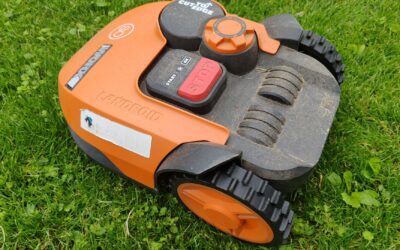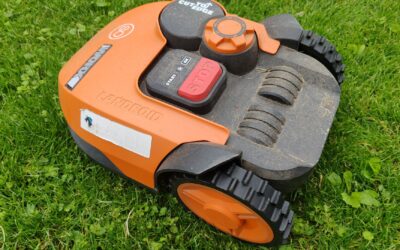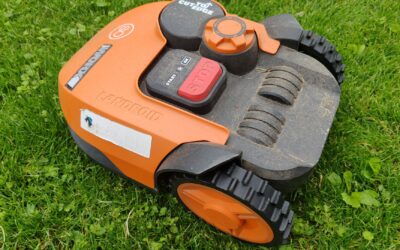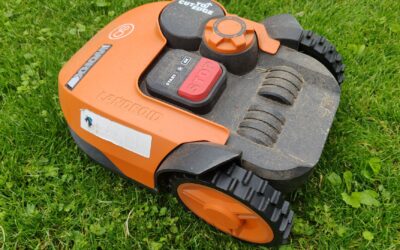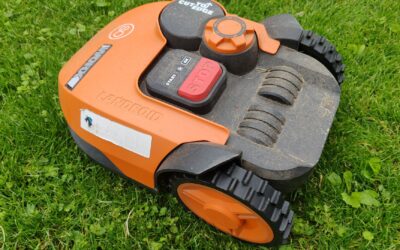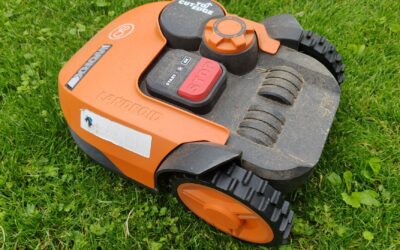
No, a robot mower does not need WiFi in the entire yard. Most robot mowers navigate using boundary wires, GPS, or onboard sensors, and they only require WiFi near the docking station for remote control, scheduling, and firmware updates. The mower itself operates offline once it leaves the base. If your WiFi signal is weak in parts of the yard, that is not a problem because the mower handles all its mowing and obstacle avoidance locally. Understanding this distinction helps you plan your network setup without unnecessary range extenders.
How Robot Mowers Navigate Without WiFi
Robot mowers rely on physical or satellite-based guidance systems, not WiFi. The most common method is a buried boundary wire that emits a low-frequency signal. The mower detects this wire and stays within the defined perimeter. This system works entirely offline, so no WiFi is needed anywhere in the yard.
Other models use GPS or RTK (Real-Time Kinematic) satellites to map the lawn. These mowers create a virtual boundary and navigate using satellite coordinates. Since the signal comes from space, your home WiFi network plays no role in the mowing operation.
When WiFi Is Actually Needed for Your Robot Mower
WiFi is only required for the mower’s “smart” features, not for the actual cutting. The docking station usually connects to your home network, and the mower communicates with it when it returns to charge. This allows you to adjust schedules, start or stop mowing, and receive notifications via a smartphone app.
Firmware updates also require an internet connection. The mower typically downloads these while docked, so the base station must be within WiFi range. If your yard is large and the base is far from the router, you may need a WiFi extender near the dock, but the rest of the lawn can be a dead zone.
The Role of Boundary Wires
Boundary wires are the most reliable navigation method for budget-friendly and mid-range robot mowers. You install a thin wire around the perimeter of your lawn and connect it to the charging station. The wire emits a signal that the mower senses, creating an invisible fence.
This system does not require any WiFi. The mower operates independently once it leaves the dock. The only downside is the installation effort, but the benefit is total offline operation without worrying about network coverage.
GPS-Based Navigation: No WiFi Required
High-end robot mowers use GPS or RTK for mapping and navigation. These mowers create a digital map of your lawn using satellite signals. Since the mower uses GPS satellites, your home WiFi network is irrelevant for positioning.
Some GPS mowers still require a cellular or WiFi connection for app features, but the actual mowing algorithm runs on the mower’s onboard processor. The yard can be a WiFi dead zone, and the mower will still cut accurately.
WiFi Range Limitations in Large Yards
If your yard is larger than a typical suburban lot, your home WiFi may not reach the area where the mower’s docking station is located. This is a common concern, but the solution is simple: move the router closer, use a mesh network, or install a WiFi extender near the base.
The mower itself does not need WiFi in the far corners of the yard. Only the base station needs a stable connection. So you do not need to cover the entire lawn with WiFi, just the area around the dock.
Cellular Alternatives for Remote Access
Some robot mowers offer a cellular modem option, which allows remote control without relying on your home WiFi. This is useful for vacation homes or properties where the docking station is far from the router. The mower communicates via a cellular network, so no WiFi is needed at all.
These models are less common and often more expensive, but they solve the WiFi range problem entirely. If you have a large yard with no WiFi near the dock, a cellular-equipped mower is a worthy alternative.
How to Fix or Work Around WiFi Limitations
- Check your mower’s manual: identify whether it uses boundary wire, GPS, or a hybrid system. That determines if WiFi is even needed for navigation.
- Place the charging station as close to your router as possible, or run a long Ethernet cable to the dock.
- Use a WiFi extender or mesh system to boost signal only to the dock area, not the whole yard.
- If your mower supports cellular connectivity, consider that option for a permanent solution.
- For boundary wire models, confirm the wire is installed correctly, a faulty wire can cause navigation issues that resemble WiFi problems.
Understanding how your mower navigates is the first step. For a deeper look at how robot mowers avoid obstacles and find their way without WiFi, see our guide on how robot mower obstacle detection works.
Related Guides
- Best ECOVACS Robot Mower Reviews for 2026
- Robot Mower Losing GPS Signal
- How Does GPS Robot Lawn Mower Work
Frequently Asked Questions
Can I use a robot mower without WiFi at all?
Yes, many robot mowers work entirely offline. Boundary wire models do not require WiFi for operation. You only lose the convenience of app control and updates, but the mower still cuts grass on schedule.
How far does WiFi need to reach for a robot mower?
WiFi only needs to reach the docking station, not the entire yard. Typically, a 30-50 foot range from the router is enough. If the dock is farther, use a mesh extender.
Do all robot mowers require a boundary wire?
No. GPS-based mowers do not need a physical wire. They use satellite coordinates to define the cutting area. However, they still need a charging station, which may require WiFi for smart features.
What if my yard is too large for WiFi coverage?
You can extend your WiFi with a mesh system, use a powerline adapter near the dock, or choose a cellular-enabled mower. The mower itself does not need WiFi in the far corners.
Can I use a cellular hotspot for my robot mower?
Yes, if your mower supports WiFi, you can connect the docking station to a cellular hotspot. This gives you remote access without a permanent home internet connection.
In short, a robot mower does not need WiFi in the entire yard. It only requires a connection near the dock for app features and updates. To learn more about how these mowers navigate without WiFi, read our guide on robot mower obstacle detection.