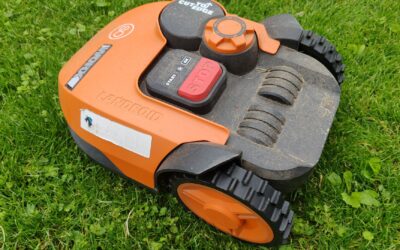
A vision robot lawn mower works by using onboard cameras and computer vision algorithms to navigate your lawn, detect obstacles, and create a digital map of the mowing area without needing a boundary wire. Instead of relying on a buried perimeter wire or GPS signals, the mower visually analyzes features like grass edges, pathways, and trees to understand its surroundings. This allows it to mow systematically, avoid hazards, and return to its charging station automatically.


Pros
- No boundary wires needed, simplifies setup and maintenance.
- Visual navigation effectively avoids obstacles and adapts to lawn layout.
- Adjustable cutting height accommodates various grass types and slope conditions.
- Safety features like tilt and rain sensors prevent accidents and damage.
- Comes with accessories including extra blades and magnetic strip for no-go zones.
Cons
- Random mowing pattern may be less efficient than systematic coverage.
- Magnetic strip length may be insufficient for larger or complex no-go areas.
- Battery life not specified, may require frequent recharging for larger lawns.
The YARDCARE V100 robot lawn mower is designed for homeowners with small lawns up to 1600 square feet. It stands out with its HD vision system that uses a camera and AI to navigate, avoiding obstacles and distinguishing grass from non-grass areas. This makes it an excellent choice for those who want a hands-off mowing experience without the hassle of laying boundary wires.
In real-world use, the V100's visual navigation is a game-changer. It detects up to 150 different obstacles and adjusts its path after a collision, ensuring thorough coverage. The included 32-foot magnetic strip lets you create no-go zones easily, protecting flower beds or play areas. The random mowing path is effective for routine maintenance, though it may occasionally miss spots that a systematic pattern would cover.
Build quality is solid with an ash gray finish and durable construction. The adjustable cutting height from 0.8 to 2.4 inches and ability to handle slopes up to 20 degrees adds versatility. Safety features like the tilt sensor and rain sensor provide peace of mind, automatically stopping the blades when lifted or in rain. The 4Ah battery is replaceable, extending the mower's lifespan.
Potential drawbacks include the random mowing pattern, which may lead to longer mowing times on complex lawns. The magnetic strip length is adequate for small yards but might need extension for larger no-go areas. Battery runtime is not specified, so users with lawns at the upper size limit may need to recharge mid-cycle.
Overall, the YARDCARE V100 is a reliable, feature-rich robot mower for small lawns. Its wire-free setup and smart navigation make it a top pick for tech-savvy homeowners seeking convenience. While not perfect for large or intricate landscapes, it delivers excellent value for its price point.

Pros
- Wire-free setup saves time and eliminates boundary wire installation
- High precision navigation near trees and buildings for continuous mowing
- Long 200-minute runtime with fast 180-minute charge cycle
- Comprehensive warranty (3-year mower, 2-year battery) for peace of mind
- Quiet operation at 60dB suitable for noise-sensitive areas
Cons
- No user reviews yet to confirm real-world performance and reliability
- Free NetRTK service only during warranty period; subscription may be required afterward
- Initial mapping setup may require careful app-guided configuration for complex yards
The LOPKIN L2500-NEO is a high-tech robotic lawn mower designed for medium-sized yards up to 0.9 acres. It eliminates the need for boundary wires by combining NetRTK, AI vision, and GNSS/INS fusion for accurate navigation. This mower is ideal for tech-savvy homeowners who want a hands-free mowing experience with the freedom to manage multiple zones from their phone.
The standout feature is the Wi-Fi HaLow connectivity, which provides a stable connection over long distances, even through obstacles. The AI vision system can identify and avoid over 300 objects, reducing the risk of collisions with pets, toys, or garden furniture. With a quiet 60dB operation, it won't disturb your outdoor peace.
The mower has an IP66-rated housing, making it dust and water resistant for reliable outdoor use. The adjustable cutting height from 1.18 to 2.76 inches suits different grass types. The 8Ah battery delivers up to 200 minutes of mowing per charge, and the 5A fast charger replenishes it in about 180 minutes.
While the technology is advanced, there are no verified user reviews yet, so long-term reliability is unproven. The free NetRTK service is only included for the warranty period; after that, a subscription may be required. Setting up the mapping for complex lawns might take some patience initially.
Overall, the LOPKIN L2500-NEO offers a compelling package for those seeking a wire-free robotic mower with cutting-edge navigation and obstacle avoidance. Its strong warranty and feature set justify its price. If you are willing to be an early adopter, this mower could simplify your lawn care routine.

Pros
- No boundary wires or RTK base station needed, setup is quick and simple
- Excellent traction and stability on steep slopes up to 80%
- Advanced obstacle detection minimizes collisions and damage
- Comprehensive anti-theft features with free 4G tracking
- Precise edge trimming reduces manual rework
Cons
- Heavier than many competitors at 52 pounds, may be difficult to move manually
- Requires cellular 4G coverage for anti-theft and tracking features
- Initial investment is high compared to wired robotic mowers
The MOVA LiDAX Ultra 2000 AWD is a cutting-edge wire-free robotic lawn mower designed for homeowners with medium-sized lawns up to 0.5 acre. It eliminates the hassle of installing boundary wires or RTK base stations by using a 360° 3D LiDAR and AI dual vision system that creates centimeter-accurate maps automatically.
Standout features include all-wheel drive with four 116W hub motors that handle slopes up to 80% and wet grass without getting stuck. The floating cutting discs and advanced suspension system ensure a clean cut on uneven terrain. Obstacle avoidance is top-notch, detecting over 300 objects like toys, pets, and garden furniture.
Build quality is robust, with a 52-pound steel and plastic construction. The dual-disc cutting deck uses 12 blades and a 15.8-inch cutting width, powered by a 36V 243Wh battery that covers 0.25 acre per charge. The Edge-Riding technology leaves only 1.2 inches of uncut grass along boundaries.
Potential drawbacks include the mower's heavy weight, which may make manual handling tedious. The anti-theft system relies on 4G cellular coverage, so remote areas without signal could limit that feature. Additionally, the high price point positions it as a premium investment.
Overall, the MOVA LiDAX Ultra 2000 AWD delivers exceptional performance, convenience, and security for those willing to invest in a top-tier robotic mower. Its wire-free setup, powerful AWD, and intelligent mapping make it a standout choice for complex lawns.
Dimensions: 29 x 21 x 12 inches
Weight: 52 pounds
Battery: 36V 243Wh Li-ion
Cutting Width: 15.8 inches
Cutting Height: 1.2 to 3.9 inches (adjustable)
Blades: 12 razor-sharp blades
Slope Capability: Up to 80%
Obstacle Clearance: 2.4 inches
Navigation: 360° 3D LiDAR + AI dual vision, RTK-free
Connectivity: 4G (3 years free), Wi-Fi
Max Area per Charge: 0.25 acre
Warranty: 3 years
Pros
- No wires or RTK base station required, reduces installation hassle
- Excellent slope handling up to 80% and all-terrain capability
- Advanced obstacle detection with AI learning for safety
- Edge cutting precision leaves only 1.2 inches of uncut grass
- Built-in 4G with 3-year free subscription for anti-theft tracking
Cons
- Battery covers only 0.25 acre per charge; larger lawns require multiple recharge cycles
- No user reviews yet, so real-world reliability is unproven
- Heavy at 52 pounds, making manual handling or relocation difficult
The MOVA LiDAX Ultra 3000 AWD is a top-tier robotic lawn mower designed for homeowners who want a completely wire-free, hands-off mowing experience. With its 360-degree 3D LiDAR and AI dual-vision system, it maps your yard with centimeter precision and avoids over 300 obstacles, including pets and garden furniture. This mower is best suited for medium to large lawns up to 0.75 acre with slopes, uneven terrain, or thick grass, where traditional wire-bound mowers struggle.
Standout features include all-wheel drive with four high-torque motors that handle slopes up to 80% and obstacles up to 2.4 inches without getting stuck. The floating cutting deck adapts to uneven ground, while the UltraTrim 2.0 edge technology leaves only 1.2 inches of uncut grass along borders, reducing manual trimming. The dual-disc system with 12 blades and a 15.8-inch cutting width delivers efficient mowing, and the mower automatically returns to charge, covering the full 0.75 acre over multiple cycles.
Build quality is robust with a 52-pound chassis and advanced suspension for stability on slopes. The included 3-year free 4G connectivity provides real-time GPS tracking and anti-theft protection with PIN locking, a rare and valuable security feature. The smart app allows dual mapping, zone-specific schedules, and cutting height adjustment from 1.2 to 3.9 inches, giving you full control over lawn care.
Potential drawbacks include the high price point, which may be a barrier for some buyers. Also, the battery only supports up to 0.25 acre per charge, so larger properties will require multiple recharge sessions. As a newly launched product with no reviews yet, its long-term reliability is unconfirmed. The heavy weight (52 lbs) can make repositioning or storage cumbersome.
Overall, the MOVA LiDAX Ultra 3000 AWD is an innovative, feature-rich robotic mower that eliminates the hassle of wires and base stations. If you have a complex, sloped lawn and value cutting-edge technology with strong security, this mower is a worthwhile investment despite its premium cost and battery range limitations.
How the Cameras Capture the Environment
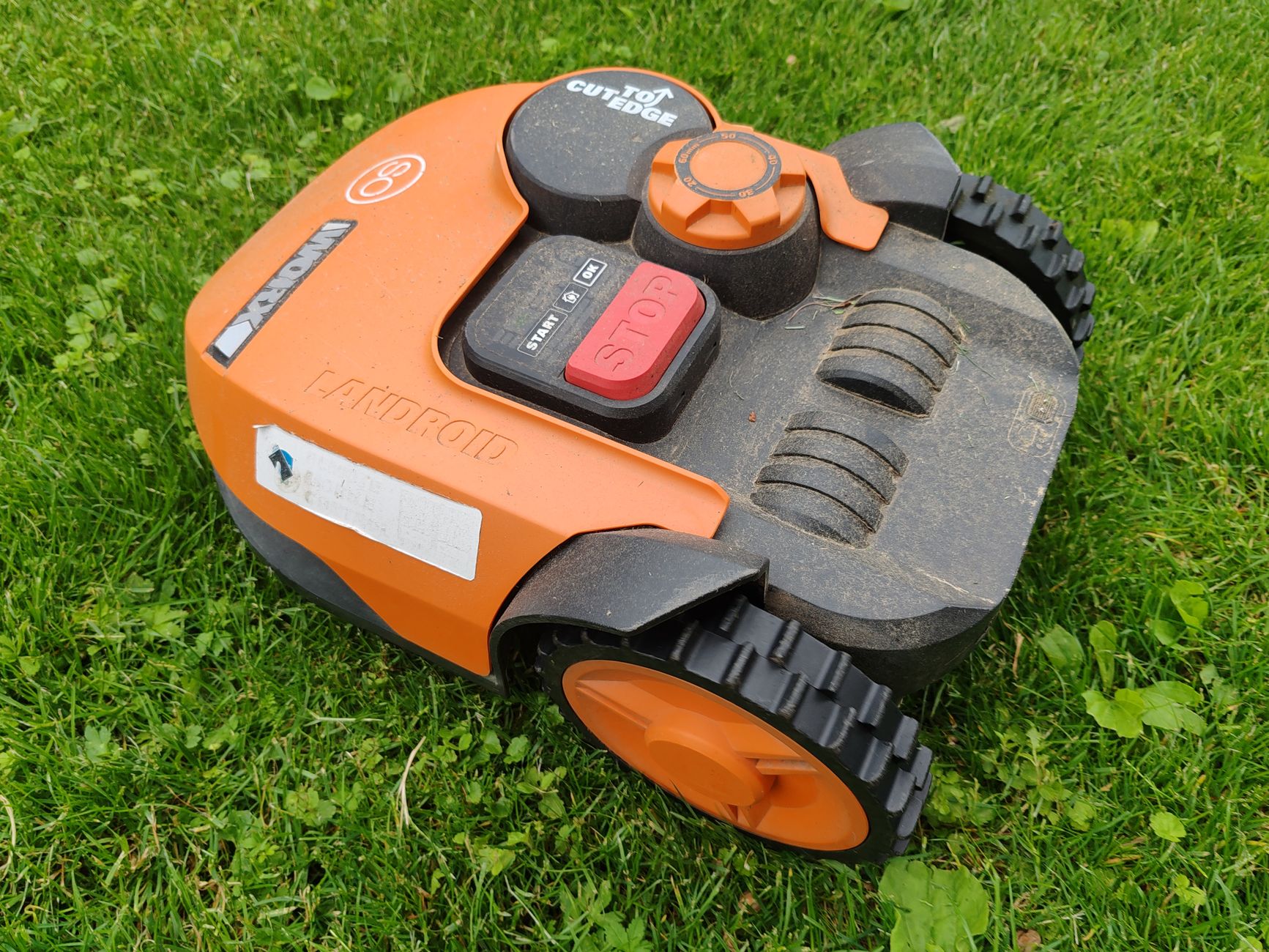
The core of a vision robot mower is a set of cameras, usually mounted on the front and top of the unit. These cameras capture a wide field of view, often in color, and record images at a high frame rate. The mower’s processor then analyzes each frame to identify distinct visual features.
Common features include the contrast between grass and pavement, the shape of flower beds, the position of trees, and the edges of the lawn. Over time, the mower builds a reference library of these features, which it uses to recognize where it is on the lawn. This process is similar to how a robot vacuum cleaner maps a room.
Computer Vision and Mapping: How the Mower Understands Your Yard
Once the cameras capture images, the mower’s computer vision software processes them to create a digital map. It uses techniques like visual odometry to track its movement by comparing consecutive frames. This allows the mower to estimate its position and orientation relative to the starting point.
The mower also builds a map of the lawn by identifying permanent landmarks. If a landmark changes (for example, a new garden ornament is placed), the system can update its map. Some advanced models use deep learning to recognize objects and adapt to seasonal changes in grass color or leaf cover.
Navigation and Mowing Patterns
After mapping, the vision mower plans an efficient mowing route. It typically uses a pattern like parallel lines or a spiral to cover the entire area without missing spots. The mower continuously checks its camera feed against the map to stay on course.
If the mower encounters a new area (like a previously blocked section of the yard), it may pause to update the map. This ability to adapt makes vision mowers particularly useful for irregularly shaped lawns. The mower can also adjust its path based on the grass height it detects through the camera.
Obstacle Detection and Avoidance
One of the key advantages of vision technology is obstacle detection. The cameras can identify objects like toys, garden tools, pets, and even people. The mower uses this information to stop or steer around the obstacle without needing a physical bump sensor.
Some vision systems also use depth sensing or stereo cameras to estimate the distance to objects. This allows the mower to slow down before approaching an obstacle, reducing the risk of collision. However, the system may struggle with transparent objects or very low obstacles that blend into the grass.
Docking and Charging
When the battery is low, the vision mower navigates back to its charging station using the visual map. It looks for the station’s distinctive shape or a visual marker (like a QR code or LED pattern) to align itself correctly. The mower then drives onto the charging contacts automatically.
If the mower cannot find the station immediately, it may follow a saved path or search for it using the camera. This self-docking function is essential for fully autonomous operation. Most modern vision mowers can resume mowing after a charge, continuing from where they left off.
Limitations of Vision Robot Mowers
Vision mowers have some limitations. They perform best in well-lit conditions; heavy shade, dusk, or nighttime can reduce accuracy. Tall, wet grass may confuse the camera image, leading to mapping errors. Also, if the lawn lacks distinct visual features (like a completely uniform green surface), the mower may have difficulty localizing.
Another limitation is that the cameras need to be kept clean. Mud, dust, or dew on the lens can degrade performance. Some models include a cleaning mechanism, but most require manual wiping. Despite these challenges, vision technology continues to improve with each generation.
What to Do for Best Results
- Ensure the lawn has good lighting during the mower’s scheduled runs
- Keep the camera lenses clean and clear of debris
- Remove large obstacles or temporary items before mowing
- Update the mower’s firmware to benefit from algorithm improvements
- Allow the mower to complete the initial mapping without interruptions
For a step-by-step guide on setting up the initial mapping process, see our article on how to map a wire free robot mower. That guide covers the detailed steps for vision and GPS based mowers.
Frequently Asked Questions
Do vision robot mowers work at night?
Most vision mowers rely on natural light, so they perform poorly in complete darkness. Some models include infrared LEDs or supplemental lighting, but for best results, schedule mowing during daylight hours. If you need night operation, consider a mower with RTK or boundary wire guidance.
How does a vision mower handle shadows?
Shadows can confuse the camera because they change the appearance of grass edges. Advanced vision mowers use algorithms that ignore temporary shadows by comparing real-time images to the stored map. However, deep shadows from buildings or trees toward evening may still cause localization errors.
Can a vision mower mow a sloped lawn?
Yes, vision mowers can handle gentle to moderate slopes, as long as the cameras can still see the ground. On steep slopes, the mower may tilt, causing the camera view to become distorted. The maximum slope angle varies by model, so check the specifications before use.
What happens if the camera gets dirty?
A dirty camera lens reduces image quality and can cause the mower to lose its position. The mower may stop mowing and display an error. You should clean the lens with a soft, dry cloth before each mowing session. Some mowers have a self-cleaning function that sprays water or uses a wiper.
How long does it take to map the lawn?
The initial mapping can take from one to three mowing cycles, depending on lawn size and complexity. During the first few runs, the mower explores the area and builds a complete map. After that, it typically requires only minor updates when the lawn changes.
Related Guides
- How Does Robot Mower Obstacle Detection Work
- Can Robot Mower Cameras Detect Animals?
- Top Compact Robot Lawn Mowers for 2026
- Best Navimow No Wire Robot Mowers in
Closing
A vision robot lawn mower uses cameras and computer vision to navigate your lawn without wires, offering flexible and autonomous mowing. For a deeper comparison of wire free technologies, check out our guide on how GPS robot lawn mowers work to see how GPS based systems differ.