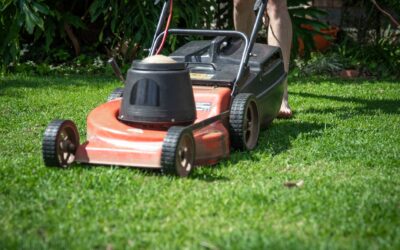
The short answer is yes, many modern robot lawn mowers do have GPS tracking, but it is not a universal feature. GPS is used for navigation, mapping, and theft recovery, though entry-level models often rely on boundary wires or other sensors instead. Understanding how GPS works in these mowers helps you decide whether it matters for your lawn.


Pros
- Wire-free installation eliminates the hassle of burying perimeter wires.
- Centimeter-level accuracy ensures every part of the lawn is covered evenly.
- Extra blades reduce long-term maintenance costs and interruptions.
- Smart mapping adapts to irregular yard shapes and multiple zones.
- Fully automatic operation with auto recharge means true set-and-forget convenience.
Cons
- Initial setup may require careful placement of the RTK antenna for best signal reception.
- Limited to lawns up to 1/4 acre, so not suitable for larger properties.
- No built-in obstacle avoidance sensors or anti-theft features mentioned in the product data.
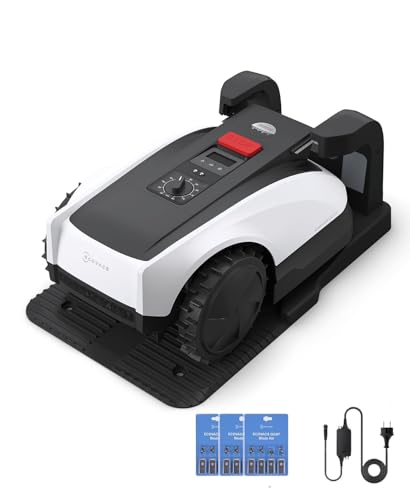
The ECOVACS Goat O1000 RTK CARE is a robotic lawn mower designed for homeowners with yards up to 1/4 acre who want a truly wire-free, hands-off mowing experience. It uses advanced RTK (Real-Time Kinematic) navigation to achieve centimeter-level positioning accuracy, eliminating the need for perimeter wires and random bump-and-turn patterns. This mower is ideal for those who value precision, efficiency, and low maintenance.
Standout features include the RTK precision navigation that follows systematic mowing paths for full coverage and cleaner lines. The CARE bundle adds 36 extra blades, significantly extending the time between blade replacements and keeping cutting performance sharp. The included RTK extension cable allows you to place the antenna in an optimal spot for strong satellite signals, crucial for reliable operation in yards with trees or other obstructions.
Design and build quality are solid, with a robust 44.5-pound chassis and dimensions that allow it to navigate typical residential lawns. The smart auto mapping feature quickly scans your yard and lets you create multiple zones via the app, so you can set different schedules for front, back, and side areas. The mower handles everything from path planning to automatic recharging, delivering a set-and-forget experience.
One potential drawback is that the initial setup requires careful antenna placement to ensure consistent signal reception, which may take some trial and error. Additionally, the 1/4 acre capacity means it is not suitable for larger properties, and the product data does not mention obstacle avoidance or anti-theft features. However, for its intended size range, the performance is reliable.
Overall, the ECOVACS Goat O1000 RTK CARE offers excellent value for homeowners seeking a wire-free, precise, and low-maintenance robotic mower. The extra blades and RTK extension cable enhance long-term usability, making it a strong choice for those with smaller, complex yards. It earns a recommendation for its accuracy, ease of use, and thoughtful bundle inclusions.
Brand: ECOVACS
Model: Goat O1000 RTK CARE
Coverage Area: Up to 1/4 acre
Navigation: RTK (Real-Time Kinematic) with centimeter-level accuracy
Included Accessories: 36 extra blades, RTK extension cable
Dimensions: 27.8 x 11.22 x 16.93 inches
Weight: 44.53 pounds
Color: O1000 RTK CARE
Product Group: Lawn & Patio

Pros
- No perimeter wire installation saves time and eliminates cable tangles.
- High-precision RTK and vision positioning delivers consistent, accurate cuts in challenging areas.
- Advanced obstacle avoidance enhances safety around pets and garden objects.
- Multi-zone and no-go-zone management allows customized mowing for complex lawns.
- Auto mapping and APP control make operation simple and convenient.
Cons
- New product with no customer reviews yet, so long-term reliability is unproven.
- At 46 pounds, the mower is heavy to move or lift if needed.
- Initial setup and app learning curve may require some patience for non-tech-savvy users.
The ANTHBOT robot lawn mower is a wire-free solution designed for homeowners with medium to large lawns up to 0.9 acres. It combines RTK satellite positioning with a 4-eye vision system to navigate and mow without buried perimeter cables, making it an excellent choice for those who want a clean installation and flexible lawn management.
Its standout feature is the dual positioning technology that maintains accuracy even under trees or near buildings where GPS is weak. The ACC auto mapping uses four cameras to identify boundaries and plan efficient routes, reducing the need for manual guidance. The intelligent obstacle avoidance system can recognize over 1000 objects, including animals, ensuring safe operation in busy yards.
Build quality is solid with a gray finish and dimensions of 25 x 11 x 16 inches, though the 46-pound weight makes it less portable. The app provides full control over 30+ zones, no-go areas, and real-time monitoring, which adds convenience but may take time to master.
Potential drawbacks include a lack of user reviews since it is a new model, so long-term durability is unknown. The weight could be a concern for those who need to move it frequently, and the reliance on app connectivity might frustrate users who prefer simpler controls.
Overall, the ANTHBOT robot lawn mower offers innovative wire-free technology and robust positioning for complex lawns. If you value precision, safety, and zoning flexibility, it is a compelling option, but early adopters should consider the lack of proven track record.
Color: Gray
Size: 3000 sqm (0.9 acre)
Dimensions: 25 x 11 x 16 inches
Weight: 46 pounds
Product Group: Lawn & Patio
Brand: ANTHBOT
Model: B0DRCJL7J7
Pros
- Robust weather protection against sun and rain
- Easy to install with no complex tools or instructions
- Perfect fit for Genie600, Genie1000, and Genie3000 mowers
- Signal-friendly design ensures no connectivity issues
- Durable materials built to last through seasons
Cons
- Limited to ANTHBOT Genie models only, not universal
- May not withstand extreme winds without additional anchoring
- No included mounting hardware or stakes for extra stability
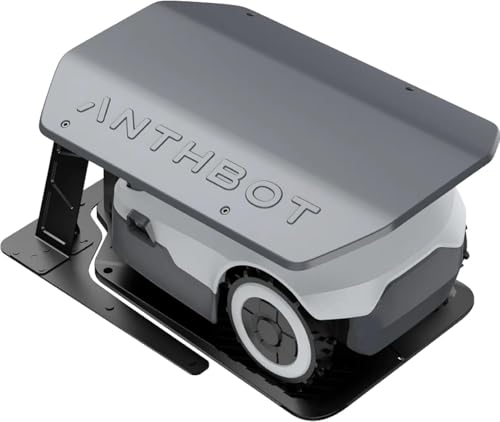
The ANTHBOT Genie Robot Lawn Mower Garage is a dedicated protective shelter for the Genie600, Genie1000, and Genie3000 robot mowers. It is designed for homeowners who want to safeguard their investment from the elements, especially those with mowers stationed in open, exposed areas of the yard. This garage offers a simple yet effective solution to prolong the life of your robotic mower.
Its standout feature is the durable, weather-resistant construction that shields against sun, rain, and debris. Real-world performance is excellent, as the garage keeps the mower dry and cool, reducing wear on electronics and plastic components. The signal-friendly design ensures your mower maintains full connectivity to its base station and app, so you never lose control or scheduling capabilities.
The build quality is solid, with sturdy materials that feel robust enough for year-round outdoor use. Installation is straightforward and quick, requiring no special tools or expertise. The compact dimensions (25 x 11 x 16 inches) allow it to fit neatly in most yards without being obtrusive, and the gray color blends naturally with typical outdoor landscapes.
One potential drawback is that this garage is specifically designed for the ANTHBOT Genie series, so it will not fit other robot mower brands. Additionally, in very windy areas, you may need to secure it with additional stakes or weights, as it does not come with built-in anchoring hardware. These are minor considerations given the overall value and protection it provides.
Overall, the ANTHBOT Genie Robot Lawn Mower Garage is a worthwhile accessory for any owner of the Genie600, Genie1000, or Genie3000. It effectively extends the mower's lifespan, maintains connectivity, and is easy to install. If you want to protect your mower from the elements and keep it running smoothly, this garage is a smart, practical choice.
How GPS Tracking Works in Robot Lawn Mowers
Robot mowers with GPS use satellite signals to determine their position on your lawn. The most common approach is Real-Time Kinematic (RTK) GPS, which provides centimeter-level accuracy by pairing a base station on your property with the mower. This lets the mower create a precise digital map of your lawn and navigate without a physical boundary wire.
Other mowers use standard GPS for approximate location, often combined with sensors like accelerometers and gyroscopes. This hybrid system helps the mower remember where it has been and avoid mowing the same spot twice. The GPS data is also used to track the mower if it is stolen, though many models require a cellular or Wi-Fi connection to report the location.
Benefits of GPS in Robot Mowers
The biggest advantage of GPS is wire-free installation. You do not need to bury a perimeter wire around your lawn, which saves time and effort, especially on complex or irregularly shaped lawns. GPS also enables efficient mowing patterns, such as straight lines instead of random bouncing, reducing mowing time and battery use.
Theft recovery is another benefit. If your mower is taken, GPS tracking can help locate it, provided the mower has a cellular or Wi-Fi connection. Some models send an alert to your phone if the mower leaves the designated area. This feature adds peace of mind, especially for expensive mowers.
Limitations of GPS Tracking
GPS accuracy can be affected by tall trees, buildings, or heavy cloud cover. While RTK systems are very accurate, they are also more expensive. Standard GPS alone may be off by several feet, which is not precise enough for lawn mowing without additional sensors. This is why many mowers still use a combination of GPS and other navigation methods.
Battery life is another concern. GPS modules consume power, which can reduce the runtime of a robot mower. Additionally, the base station for RTK systems requires a clear view of the sky and a power source, adding complexity to the setup.
Do All Robot Mowers Have GPS?
No, not all robot mowers have GPS tracking. Many budget and mid-range models still use a boundary wire and a simple random or semi-random mowing pattern. These systems are reliable and less expensive, but they lack the mapping and theft features of GPS models. Some manufacturers offer both wire-based and GPS versions of the same mower, so you can choose based on your needs and budget.
If you have a small, simple lawn, a wire-based mower may work perfectly fine. GPS becomes more valuable on larger, complex lawns or if you want the convenience of wire-free installation and theft tracking.
Alternatives to GPS in Robot Mowers
Besides GPS, robot mowers use several other navigation technologies. The most common is a boundary wire that emits a signal the mower detects to stay within the cut area. Some mowers use vision-based systems with cameras to recognize landmarks and borders. Others rely on lidar or ultrasonic sensors for obstacle detection and mapping.
Each method has trade-offs. Vision systems can be confused in low light, while lidar adds cost. Wire systems are reliable but require installation and can be damaged by digging. GPS offers a good balance of convenience and accuracy, but it is not the only option.
How to Decide If You Need GPS Tracking
To decide whether GPS tracking is important for your robot mower, consider your lawn size, shape, and your tolerance for installation work. If you want a wire-free setup and the ability to track the mower if stolen, GPS is worth the extra cost. For a small, simple lawn, a wire-based mower may be more cost-effective.
- Check the mower specifications for GPS type (RTK vs. standard) and whether it requires a base station.
- Verify if the GPS tracking works without a cellular or Wi-Fi connection for theft recovery.
- Consider the terrain: GPS works best in open areas with clear sky views.
- Compare the total cost of a GPS mower versus a wire-based model plus installation time.
If you are still unsure about which navigation technology suits your lawn, reading a detailed guide on how robot mowers handle obstacle detection can help you understand the broader picture. Learn how robot mowers detect obstacles to see how sensors complement GPS or wire systems.
Frequently Asked Questions
Can GPS tracking work without an internet connection?
GPS itself does not require internet; it receives satellite signals. However, to send the location to your phone or to track a stolen mower, the mower typically needs a cellular or Wi-Fi connection. Some models store the location and share it when they reconnect.
Is GPS on a robot mower accurate enough to avoid flower beds?
Standard GPS can be off by several feet, so it is not reliable for precise boundaries. RTK GPS provides centimeter accuracy, making it suitable for complex lawns with flower beds. Without RTK, you still need boundary wires or vision sensors.
Can I add GPS tracking to a robot mower that doesn’t have it?
Retrofitting GPS is usually not possible because the mower’s hardware and software are designed around a specific navigation system. Some aftermarket GPS trackers can be attached physically, but they will not integrate with mowing functions. They can only provide basic location tracking.
Do robot mowers with GPS cost more?
Yes, GPS-equipped robot mowers are generally more expensive than wire-based models, especially those with RTK technology. The added cost covers the GPS module, base station, and often more advanced software. The price difference can range from a few hundred to over a thousand dollars.
Related Guides
- Best ECOVACS Robot Mower Reviews for 2026
- Robot Mower Losing GPS Signal
- How Does GPS Robot Lawn Mower Work
Final Thoughts
Robot lawn mowers with GPS tracking offer convenience, efficiency, and theft protection, but the feature is not essential for every lawn. If you value wire-free installation and precise mapping, a GPS model is a strong choice. For more details on how robot mowers navigate and handle different lawn sizes, check out our guide on how many acres a robot mower can mow.