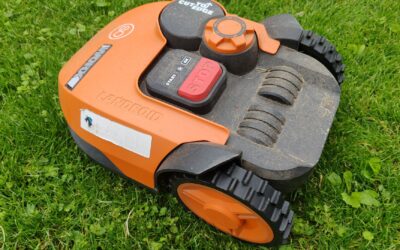
Wire free robot mowers are generally accurate enough to cut most lawns evenly without missing large areas, but their precision varies based on the technology they use and your specific yard conditions. Most models rely on a combination of GPS, inertial sensors, and vision systems to navigate, and these systems can achieve repeatability within a few inches under good conditions. However, accuracy drops when the GPS signal is weak, the terrain is complex, or obstacles block the sensors. Understanding these factors helps you set realistic expectations and choose the right setup for your lawn.

Pros
- No perimeter wire installation saves time and eliminates cable tangles.
- High-precision RTK and vision positioning delivers consistent, accurate cuts in challenging areas.
- Advanced obstacle avoidance enhances safety around pets and garden objects.
- Multi-zone and no-go-zone management allows customized mowing for complex lawns.
- Auto mapping and APP control make operation simple and convenient.
Cons
- New product with no customer reviews yet, so long-term reliability is unproven.
- At 46 pounds, the mower is heavy to move or lift if needed.
- Initial setup and app learning curve may require some patience for non-tech-savvy users.
The ANTHBOT robot lawn mower is a wire-free solution designed for homeowners with medium to large lawns up to 0.9 acres. It combines RTK satellite positioning with a 4-eye vision system to navigate and mow without buried perimeter cables, making it an excellent choice for those who want a clean installation and flexible lawn management.
Its standout feature is the dual positioning technology that maintains accuracy even under trees or near buildings where GPS is weak. The ACC auto mapping uses four cameras to identify boundaries and plan efficient routes, reducing the need for manual guidance. The intelligent obstacle avoidance system can recognize over 1000 objects, including animals, ensuring safe operation in busy yards.
Build quality is solid with a gray finish and dimensions of 25 x 11 x 16 inches, though the 46-pound weight makes it less portable. The app provides full control over 30+ zones, no-go areas, and real-time monitoring, which adds convenience but may take time to master.
Potential drawbacks include a lack of user reviews since it is a new model, so long-term durability is unknown. The weight could be a concern for those who need to move it frequently, and the reliance on app connectivity might frustrate users who prefer simpler controls.
Overall, the ANTHBOT robot lawn mower offers innovative wire-free technology and robust positioning for complex lawns. If you value precision, safety, and zoning flexibility, it is a compelling option, but early adopters should consider the lack of proven track record.
Color: Gray
Size: 3000 sqm (0.9 acre)
Dimensions: 25 x 11 x 16 inches
Weight: 46 pounds
Product Group: Lawn & Patio
Brand: ANTHBOT
Model: B0DRCJL7J7

Pros
- Wire-free setup saves time and avoids unsightly perimeter wires.
- RTK+Vision navigation works reliably in challenging garden layouts.
- AI obstacle detection enhances safety and protects your mower.
- Multi-zone management lets you customize mowing for different areas.
- Quiet operation suitable for noise-sensitive environments.
Cons
- Limited to lawns up to 1/8 acre, not suitable for larger properties.
- Anti-theft tracking requires an optional 4G module purchase.
- No user reviews yet, so long-term reliability is unproven.
The Segway Navimow i105N is a wire-free robotic lawn mower designed for small to medium lawns up to 1/8 acre. It targets homeowners who want a hassle-free mowing experience without burying perimeter wires. The standout feature is its RTK+Vision navigation system, which combines real-time kinematic positioning with a camera to deliver centimeter-level accuracy even under trees or in narrow passages.
Setting up the Navimow i105N is impressively simple. You guide it with your smartphone to map virtual boundaries, and the AI-assisted mapping feature automatically identifies lawn edges and completes the map. Once running, it mows in systematic patterns to ensure full coverage and changes direction after each pass to minimize tracks. The 140-degree camera and AI algorithms detect over 150 types of obstacles, from toys to pets, providing reliable collision avoidance.
Build quality is solid, with a robust chassis and weather-resistant components. The package includes a charging station, GNSS antenna, and spare blades. The app is intuitive, allowing you to create up to 12 zones, set different schedules, and monitor progress. At 58dB(A), it operates quietly enough for early morning or evening use without disturbing the peace.
However, the 1/8 acre limit may disappoint owners of larger lawns. Additionally, while the 3-year warranty is generous, anti-theft tracking requires an optional 4G module, adding cost. With no user reviews yet, it's hard to gauge long-term durability, but Segway's reputation in robotics offers some confidence.
Overall, the Segway Navimow i105N is an excellent choice for small lawn owners seeking a wire-free, intelligent mowing solution. Its RTK+Vision navigation and AI features make it a standout in its category, though potential buyers should verify their lawn size and consider the optional anti-theft add-on.

Pros
- No wires or RTK base station required, reduces installation hassle
- Excellent slope handling up to 80% and all-terrain capability
- Advanced obstacle detection with AI learning for safety
- Edge cutting precision leaves only 1.2 inches of uncut grass
- Built-in 4G with 3-year free subscription for anti-theft tracking
Cons
- Battery covers only 0.25 acre per charge; larger lawns require multiple recharge cycles
- No user reviews yet, so real-world reliability is unproven
- Heavy at 52 pounds, making manual handling or relocation difficult
The MOVA LiDAX Ultra 3000 AWD is a top-tier robotic lawn mower designed for homeowners who want a completely wire-free, hands-off mowing experience. With its 360-degree 3D LiDAR and AI dual-vision system, it maps your yard with centimeter precision and avoids over 300 obstacles, including pets and garden furniture. This mower is best suited for medium to large lawns up to 0.75 acre with slopes, uneven terrain, or thick grass, where traditional wire-bound mowers struggle.
Standout features include all-wheel drive with four high-torque motors that handle slopes up to 80% and obstacles up to 2.4 inches without getting stuck. The floating cutting deck adapts to uneven ground, while the UltraTrim 2.0 edge technology leaves only 1.2 inches of uncut grass along borders, reducing manual trimming. The dual-disc system with 12 blades and a 15.8-inch cutting width delivers efficient mowing, and the mower automatically returns to charge, covering the full 0.75 acre over multiple cycles.
Build quality is robust with a 52-pound chassis and advanced suspension for stability on slopes. The included 3-year free 4G connectivity provides real-time GPS tracking and anti-theft protection with PIN locking, a rare and valuable security feature. The smart app allows dual mapping, zone-specific schedules, and cutting height adjustment from 1.2 to 3.9 inches, giving you full control over lawn care.
Potential drawbacks include the high price point, which may be a barrier for some buyers. Also, the battery only supports up to 0.25 acre per charge, so larger properties will require multiple recharge sessions. As a newly launched product with no reviews yet, its long-term reliability is unconfirmed. The heavy weight (52 lbs) can make repositioning or storage cumbersome.
Overall, the MOVA LiDAX Ultra 3000 AWD is an innovative, feature-rich robotic mower that eliminates the hassle of wires and base stations. If you have a complex, sloped lawn and value cutting-edge technology with strong security, this mower is a worthwhile investment despite its premium cost and battery range limitations.

Pros
- All-wheel drive handles steep inclines up to 80% and rough terrain
- Wire-free setup with quick LiDAR mapping saves installation time
- Fast 45-minute recharge for efficient large lawn coverage
- Quiet enough for nighttime mowing, no noise complaints
- Anti-theft 4G tracking and real-time monitoring via app
Cons
- High upfront cost compared to wire-guided mowers
- No user reviews yet, reliability is unproven
- Optional trimmer module required for sub-1.18-inch edge trimming
The Dreame A3 AWD is a high-end robotic lawn mower designed for homeowners with challenging, sloped yards up to 0.5 acre. It eliminates the need for boundary wires or RTK stations, using 360° 3D LiDAR and AI binocular vision to create a precise map of your lawn in minutes. This makes it ideal for those who want a set-and-forget solution without the hassle of installation.
Its standout feature is the all-wheel drive system that tackles inclines up to 80% and obstacles up to 2.17 inches, far beyond what most robotic mowers can handle. The 1.97-inch edge trimming is impressive, and with the optional trimmer module it gets even closer to walls. The 45-minute fast charge is a significant advantage, ensuring the mower can finish a 0.5-acre lawn in a single day.
Build quality appears robust with a weight of 26.4 pounds and a dimensions of 25 x 17.05 x 11.57 inches. The gray color is practical for outdoor use. The Dreamehome App provides full control, including scheduling, custom patterns, and real-time monitoring via the 4G module and HDR camera, which also serves as a theft deterrent.
Potential drawbacks include the high price point and the lack of user reviews, so long-term reliability is unknown. The edge-trimming module is sold separately, which adds cost. Also, while the mower is quiet, it is not completely silent. However, for those tired of manual mowing or paying for lawn care, the A3 AWD offers a compelling, premium solution.
Overall, the Dreame A3 AWD is a top-tier choice for homeowners with steep, complex lawns who want a wire-free, high-performance robotic mower with smart features. It is best for those willing to invest in quality and convenience, and who value no monthly fees. If your yard is relatively flat or small, lower-cost options may suffice, but for challenging terrain, this mower is hard to beat.

Pros
- No need for boundary wires or RTK base stations, simplifying installation and maintenance.
- Exceptional navigation accuracy with 3D LiDAR, works day/night and in poor weather conditions.
- Comprehensive anti-theft features including GPS tracking, device lock, and loud alarm.
- Quiet operation and IPX6 waterproof rating allow easy cleaning with a water jet.
- App control with multi-zone mapping, scheduling, and three preset mowing modes.
Cons
- The AI bionic triple vision module is sold separately, adding extra cost for full Pro features.
- Battery runtime may be limited for larger lawns (max mapping area is 0.37 acre).
- No user reviews yet, so real-world performance and durability are unverified.
The HOOKII Neomow X2 LE is a next-generation robotic lawn mower that eliminates the need for boundary wires or RTK antennas. Designed for small to medium lawns up to 0.37 acre, it uses a 360° 3D LiDAR sensor combined with AI vision to navigate with inch-level precision. This makes it an excellent choice for homeowners who want a truly wire-free setup and reliable performance even under dense trees or at night.
Standout features include the upgraded LiDAR system, which delivers ten times more point cloud data per second for accurate obstacle prediction and intelligent navigation. The GPS anti-theft system adds security with real-time tracking and a loud alarm if the mower is lifted. The 4G app connectivity (with 1GB free data) lets you control and monitor the mower from anywhere, while the 13Ah battery extends runtime to 150 minutes for efficient mowing.
Build quality is robust with an IPX6 waterproof rating, allowing you to rinse the mower clean with a water jet. The cutting deck handles tough grasses like St. Augustine and Bermuda, with height adjustment from 1.18 to 3.35 inches. The base station can be placed indoors for added safety, and the mower auto-recharges and resumes where it left off. However, the AI bionic triple vision module for advanced features like auto-mapping and real-time monitoring is sold separately.
Potential drawbacks include the need to purchase the optional vision module for full Pro capabilities, and the battery range may not suit larger lawns beyond 0.37 acre. Since there are no user reviews yet, long-term reliability is uncertain, but the technical specs are impressive for the price.
Overall, the HOOKII Neomow X2 LE offers a compelling wire-free solution for small lawns. Its combination of 3D LiDAR, GPS anti-theft, and app control makes it a standout choice for tech-savvy homeowners seeking convenience and security. If you value precision and minimal setup, this mower is worth considering.
How GPS and RTK Accuracy Affects Navigation
The primary source of positioning for wire free mowers is GPS. Standard consumer GPS has an accuracy of about 10 to 16 feet, which is not precise enough for mowing. That is why many wire free mowers use Real-Time Kinematic (RTK) correction, which improves accuracy to roughly 1 to 2 inches. RTK works by comparing the mower’s GPS signal with a fixed base station, either on your property or through a subscription network.
If your mower does not use RTK, its accuracy will be much lower and it may drift across boundaries or miss strips of grass. Even with RTK, accuracy can degrade in areas with heavy tree cover or near tall buildings that block satellite signals. The mower may temporarily lose its position and have to re-map, causing uneven coverage.
The Role of Vision and Sensor Systems
Many wire free mowers supplement GPS with optical cameras, LiDAR, or ultrasonic sensors. These systems detect obstacles, lawn edges, and changes in grass height. Vision-based navigation can improve accuracy by providing local reference points that GPS alone cannot offer. For example, a camera can recognize a flower bed edge and keep the mower from crossing it.
However, vision systems have limitations. They struggle in low light, rain, or when grass is very tall. If the sensors get dirty or covered with debris, the mower may misjudge distances and bump into objects. Regular cleaning and software updates help maintain sensor accuracy over time.
Mapping Quality and Initial Setup
Accuracy starts with the initial mapping run. Most wire free mowers require you to walk the perimeter or drive the mower around the lawn to create a digital map. If this mapping session is rushed or done in poor lighting, the map may have errors that affect every subsequent mow.
Some mowers allow you to edit the map manually via an app, letting you adjust no-go zones or add virtual boundaries. Taking time to refine the map after the first few mows can significantly improve coverage accuracy. A well-tuned map reduces overlaps and ensures the mower covers every section of the lawn.
Terrain and Lawn Size Impact
Wire free mowers are at their best on relatively flat, open lawns. Slopes, irregular shapes, and narrow passages challenge the navigation algorithms. On a steep slope, the mower may lose traction or slide, throwing off its position estimate. Small or complex lawns with many planters, trees, and pathways require more precise mapping and may see more missed spots.
Larger lawns, on the other hand, give the mower more room to correct its path. With a bigger area, small inaccuracies become less noticeable. But if the lawn is very large, the mower may need to recharge mid-mow, and restarting from the charging station can introduce slight positioning shifts that compound over time.
Obstacle Density and Dynamic Changes
Every object on your lawn is a potential accuracy hazard. Garden furniture, toys, sprinklers, and even tall weeds can confuse the mower’s sensors. If an obstacle appears after the initial map was made, the mower may not recognize it and could try to drive through it, leading to a collision or a detour that leaves an uncut patch.
Dynamic changes like growing grass, falling leaves, or shifting shadows also affect sensor performance. The mower’s software algorithms must adapt to these changes in real time. Frequent software updates from the manufacturer help improve how the mower handles new obstacles, so keeping the firmware current is important for maintaining accuracy.
Weather and Environmental Conditions
Rain, fog, and heavy cloud cover can weaken GPS signals and reduce the effectiveness of optical sensors. Most wire free mowers are designed to operate in light rain, but accuracy drops noticeably during storms. Wet grass also weighs down the blades and can cause the mower to slip, leading to navigation errors.
Temperature extremes can affect battery performance and sensor calibration. Cold weather may reduce battery life, forcing more charging cycles and more opportunities for positional drift. In hot weather, electronic components can overheat, causing the mower to stop or miscalculate its path. Planning mowing schedules around mild weather yields the best accuracy.
How to Improve Your Wire Free Mower’s Accuracy
- Ensure a strong, unobstructed GPS signal by trimming overhanging branches and avoiding mowing near tall buildings.
- Clean the mower’s sensors and cameras regularly to prevent dirt from distorting navigation.
- Perform a careful initial mapping walk, and refine the map in the app after the first few mows.
- Remove movable obstacles from the lawn before each mowing session to avoid collisions and missed areas.
- Keep the mower’s firmware updated to benefit from improved navigation algorithms.
For more detailed guidance on choosing and setting up a wire free robot mower that matches your lawn’s specific challenges, browse our blog for articles on navigation technology, real-world accuracy tests, and tips from experienced users.
Related Guides
- Robot Lawn Mower Without RTK Station
- Robot Lawn Mower Without GPS
- The Best GNSS Robot Mower for Small Lawn in 2026
- Best Robot Mower with GPS for Small Yard in
Frequently Asked Questions
Can wire free robot mowers work on uneven lawns?
Yes, but accuracy decreases on steep slopes or bumpy terrain. The mower may lose traction and drift off its intended path. For best results, choose a model with all-wheel drive and advanced gyroscopes that can compensate for uneven ground.
Do wire free mowers need a strong GPS signal?
Yes, a clear view of the sky is critical. RTK correction improves accuracy, but even with RTK, heavy tree cover or deep shadows can cause signal loss. Some mowers combine GPS with inertial navigation to bridge short gaps.
How does rain affect wire free mower accuracy?
Rain weakens GPS signals and can fog optical sensors, reducing accuracy by several inches. Wet grass also causes slippage. Most manufacturers advise against mowing in heavy rain to protect both the mower and the lawn.
Can I use a wire free mower in a small garden?
Yes, but small gardens with many obstacles require very precise mapping. The mower may have less room to correct errors, so missed spots become more noticeable. A mower with vision sensors and manual map editing is recommended.
Will trees interfere with wire free mower accuracy?
Trees can block GPS signals and create shadows that confuse optical sensors. Falling leaves also trigger the mower’s obstacle detection, causing it to stop or detour. Maintaining a clear lawn and trimming low branches helps preserve accuracy.
Wire free robot mowers are accurate enough for most homeowners, especially when equipped with RTK GPS and vision systems. Their performance depends heavily on your specific yard conditions and how well you set up and maintain the system. To dive deeper into the latest models and real-world accuracy reports, explore our blog for expert comparisons and user experiences.