The robot mower size you need is determined primarily by your lawn’s square footage, the complexity of its layout, and the mower’s battery run time per charge. Most manufacturers rate mowers for a maximum yard area, but real-world performance also depends on slope, obstacles, and grass type. A mower rated for 0.5 acres can handle a flat, open lawn of that size, but a yard with steep hills or many flower beds may need a smaller rated mower or one with better navigation. Understanding these factors helps you avoid buying a mower that is either too small (and runs out of battery mid cut) or unnecessarily large for a modest lawn.

Pros
- Excellent all-weather protection for your robot mower.
- Sturdy steel frame with rust-proof coating.
- Wide compatibility with numerous robot mower brands.
- Quick and secure installation with anchor bolts.
- Aesthetic design integrates well into garden decor.
Cons
- No user reviews yet to verify real-world performance.
- Must store mower frost-free if temperatures drop below freezing.
- Only available in gray color, which may not suit all preferences.
The CNAINFC Plus Size Garage for Robot Lawn Mower is a practical shelter designed to protect your investment from the elements. It's ideal for homeowners who want to shield their robotic mower from rain, snow, hail, UV rays, and debris, thereby extending its lifespan. This garage is compatible with a wide range of popular brands, including Ecovacs, Husqvarna, Worx, and many others, making it a versatile choice for most users.
Standout features include a rust-proof spray-coated steel frame and a thickened 600D high-density waterproof oxford fabric canopy. These materials ensure durability and reliable weather protection. The garage is easy to install on both lawns and hard surfaces, with eight 7-inch stainless steel anchor bolts that keep it firmly in place. The generous dimensions (35 x 35 x 17 inches) accommodate most robot mowers comfortably, allowing them to enter from the side for charging or shelter.
Design-wise, the white roof gives the garage a clean, tent-like appearance that blends naturally into garden settings. The overall construction feels solid for its weight (4.9 pounds), though the fabric canopy may require periodic cleaning. The ability to disassemble and store the garage during winter is a convenient bonus, especially in colder climates where the mower itself needs to be kept frost-free.
One potential drawback is the lack of user reviews, so long-term durability is unverified. Additionally, the garage is only available in gray, which may not match every garden aesthetic. The instructions advise storing the mower indoors when temperatures drop below freezing, as the garage itself does not provide insulation.
Overall, the CNAINFC Plus Size Garage offers a cost-effective, well-built solution for protecting your robot lawn mower. Its robust materials, easy installation, and broad compatibility make it a strong contender for anyone seeking to prolong their mower's life. If you value weather protection and simplicity, this garage is a solid investment.
Pros
- Robust all-weather protection (rain, snow, UV, hail).
- Compatible with a wide range of robot mower brands.
- Secure installation with included ground anchors.
- Sleek, low-profile design that fits garden aesthetics.
- Easy to assemble and disassemble for seasonal storage.
Cons
- May be too small for some oversized mower models; check dimensions.
- Polycarbonate roof may scratch over time if not handled carefully.
- Limited color choice (only black).
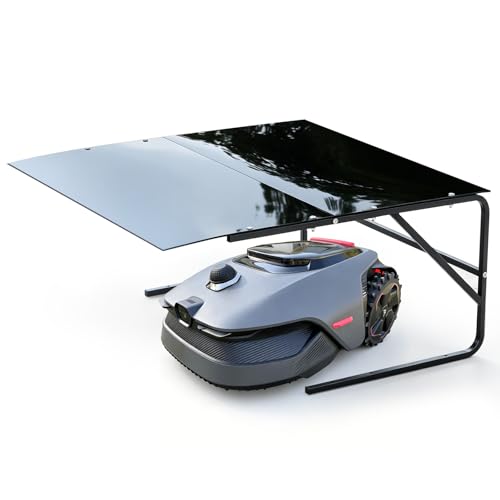
The CNAINFC Robot Mower Garage is a practical and durable shelter designed to protect your robotic lawn mower and its charging station from the elements. It is ideal for homeowners who want to extend the life of their mower by keeping it safe from rain, snow, hail, intense sunlight, and debris. The garage is compatible with a vast array of popular mower brands, including Segway, Husqvarna, WORX, and many others, making it a versatile choice for most users.
Standout features include its heavy-duty steel frame and polycarbonate solid sheet roof, which provide robust all-weather protection. The garage is designed to prevent overheating and moisture damage, ensuring your mower runs efficiently year-round. Real-world performance is solid, with the included stainless steel ground anchors keeping the structure stable even in windy conditions, giving you peace of mind.
The design is clean and modern, with a sleek black roof that blends naturally into any garden setting. Assembly is straightforward using screw-joint connections, and the garage can be installed on lawn or hard ground. The side access allows your mower to easily enter for recharging or rain protection, maintaining a tidy outdoor space.
One potential drawback is that the large size may not accommodate all oversized mower models, so it is wise to check dimensions before purchase. The polycarbonate roof may also be prone to scratching if not handled with care. Additionally, the color is limited to black, which may not suit all preferences.
Overall, the CNAINFC Robot Mower Garage offers excellent value for its price, combining robust protection, easy installation, and a sleek design. It is a worthwhile investment for any robot mower owner looking to safeguard their equipment and enhance their lawn care routine.
Color: Black
Size: Large Size
Dimensions: 32 x 29 x 17 inches
Weight: 6.6 Pounds
Material: Steel frame, Polycarbonate (PC) solid sheet roof
Compatibility: Fits 99% of robot mowers (Lymow, Segway Navimow, Sunseeker, Mammotion LUBA, Mammotion YUKA, ANTHBOT, ECOVACS, MOVA, Greenworks, Husqvarna, DREAME, WORX)

Pros
- Heavy-duty carbon steel construction for long-lasting durability.
- All-weather protection with rain, snow, and UV resistance.
- Easy, tool-free assembly with spring-loaded clips.
- Versatile compatibility with most robotic mower brands.
- Removable zippered curtain adapts to seasonal needs.
Cons
- May require additional anchoring in high wind areas to prevent tipping.
- Zippered cover may be less durable than rigid doors over extended use.
- Only available in gray color, which may not match all garden aesthetics.
The TAOMEELOR Carbon Steel Robot Mower Garage is a purpose-built shelter designed to protect your robotic lawn mower from the elements. It is ideal for homeowners who want to extend the lifespan of their mower by keeping it safe from rain, snow, and UV damage. This garage is compatible with a wide range of mower brands, making it a versatile addition to any lawn care setup.
Standout features include the durable carbon steel frame with a powder-coated finish that resists rust and corrosion. The removable zippered front curtain is a clever design element: in summer, it can be taken off to allow the mower to enter and exit freely, while in winter it seals tightly to keep out snow and moisture. The sloped roof prevents water accumulation, and the extra large size fits 92% of robotic mowers on the market.
Build quality is solid, with stainless steel components and spring-loaded clips that make assembly quick and tool-free. The silver canopy resembles a small camping tent, adding a charming, natural look to your garden. The 8-pound weight gives it stability, but it is light enough to move if needed. The zippered entrance ensures a snug closure after each use.
Potential drawbacks include the need for additional anchoring in very windy areas, as the structure is not bolted down. The zippered cover may wear over time compared to rigid doors. Also, the gray color is the only option, which might not suit every garden style. However, these are minor concerns given the overall value.
Overall, the TAOMEELOR robot mower garage is a well-designed, durable solution for protecting your robotic mower. Its combination of sturdy materials, smart features, and broad compatibility makes it a worthwhile investment for any lawn owner. We recommend it for those seeking reliable, all-weather shelter without needing to drill or permanently modify their yard.
Color: Gray
Dimensions: 30 x 29 x 30 inches
Weight: 8 pounds
Material: Carbon Steel with powder-coated finish
Compatibility: Fits 92% of robotic mowers, including Ecovacs, Husqvarna, Worx, LUBA 2, Anthbot, Navimow, Yuka2000, and more
Assembly: Tool-free with spring-loaded clips
Pros
- Great value with 30 blades and screws included.
- Double-sided design effectively doubles blade life.
- Corrosion-resistant titanium coating withstands outdoor moisture.
- Simple installation with a standard screwdriver.
- Compatible with a wide range of popular robotic mowers.
Cons
- Compatibility limited to single-disc mowers; check your model before buying.
- Blades are very sharp, requiring careful handling during installation.
- Some users may prefer thicker blades for very dense or tall grass.
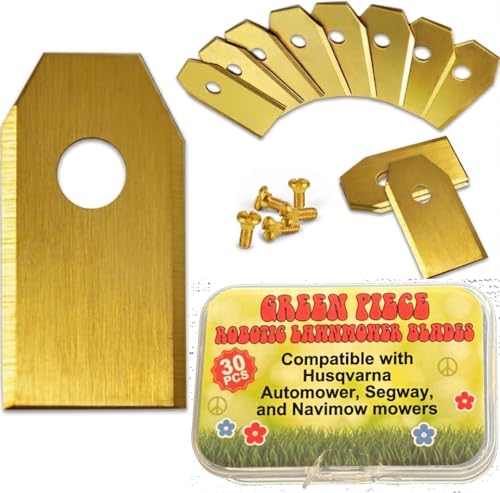
The Green Piece Robotic Mower Blades 30 Pack is a comprehensive replacement set designed for owners of single-disc robotic mowers. This pack includes 30 titanium-coated stainless steel blades and 30 stainless steel screws, offering a convenient all-in-one solution for maintaining a sharp cutting edge. It is ideal for those who own compatible mowers from Husqvarna, Gardena, Segway, Navimow, Yard Force, and others, and want a reliable way to keep their lawn looking pristine.
The standout feature is the titanium coating, which enhances durability and corrosion resistance, ensuring blades stay sharp longer even in damp conditions. The double-sided design allows you to flip the blade once one side dulls, effectively doubling its lifespan. At 0.75mm thickness, these blades strike a good balance between cutting efficiency and durability, reducing mowing time without causing excessive wear on the mower's motor.
Build quality is solid, with each blade made from premium stainless steel that resists rust and grass sap buildup. The included screws are also stainless steel, preventing corrosion and ensuring a secure fit. Installation is straightforward with a basic screwdriver, making blade swaps quick and hassle-free. The blades are extremely sharp out of the box, so handling with gloves is recommended for safety.
A potential drawback is that these blades are specifically designed for single-disc mowers, so they won't work with multi-disc models. Also, while the 0.75mm thickness is efficient for most lawns, users with very tough or overgrown grass might prefer a thicker blade. However, for regular maintenance on standard lawns, this thickness performs well.
Overall, the Green Piece Robotic Mower Blades 30 Pack delivers excellent value and performance. The combination of titanium coating, double-sided edges, and included screws makes it a cost-effective and practical choice for robotic mower owners. If you want to keep your lawn cut cleanly without frequent blade changes, this pack is a smart investment.

Lawn Area: The Primary Factor
The most straightforward starting point is your total mowing area. Measure the length and width of your lawn (excluding house, driveway, and garden beds) to get square footage. Most robot mower listings specify a recommended maximum area, such as 0.25 acres (about 10,890 sq ft) or 0.5 acres (21,780 sq ft). Choose a mower rated slightly above your actual size to account for navigation inefficiencies and battery fade over time.
Keep in mind that mowers cut in random patterns and may revisit sections multiple times. A mower rated for a 0.3 acre lawn may need 2-3 charges to finish a 0.25 acre yard if the layout is complex. Always leave a 10-20% buffer beyond the manufacturer’s stated maximum to ensure reliable coverage.
Terrain and Slope
Hills and uneven terrain affect both the mower’s ability to climb and its battery consumption. Most robot mowers can handle slopes up to 20-30%, but steep hills reduce cutting efficiency and increase runtime. If your yard has significant grade changes, you may need a mower with a higher torque motor or all wheel drive, which often comes with a larger battery pack. That larger battery also means the mower may be physically bigger, so check dimensions for narrow passages.
For a yard with many slopes, a mower rated for a smaller area (e.g., 0.2 acres) might perform better on a 0.25 acre hilly lawn than a flat land mower rated for 0.3 acres. Prioritize climbing ability over raw area rating if your terrain is challenging. For more details, see our article on best robot lawn mowers for hills and uneven terrain.
Battery Runtime and Charging Time
A mower’s battery capacity (measured in Ah or watt hours) determines how long it can cut before needing to recharge. Typical runtimes range from 60 to 90 minutes, with charging times of 60 to 120 minutes. A mower that cuts for 80 minutes on flat grass may only last 45 minutes on thick, tall grass or steep slopes. If your lawn area is large, you’ll want a mower that either has a longer runtime or a fast charger so it returns to work quickly.
Some mowers can complete a full mow in a single session if the yard is small enough. Others will need multiple cycles throughout the day. Check the manufacturer’s claimed coverage per charge (often in square meters or acres) and compare it to your lawn size. If the mower needs to recharge more than once per mow, ensure it can dock and resume automatically.
Lawn Complexity and Obstacles
A simple rectangular lawn with few obstacles is easier for any robot mower to cover efficiently. However, if your yard has many trees, flower beds, narrow pathways, or irregular shapes, the mower must navigate around these obstacles, often traveling more distance than a straight line. This increases the effective area the mower needs to travel, reducing actual coverage per charge.
Mowers with random navigation may leave parts of a complex lawn unmown unless they run longer. Mowers with systematic or GPS guided navigation (like RTK based models) can cover complex layouts more efficiently, but they also require a clear view of the sky for the GPS signal. For more on how GPS mowers work, see how does GPS robot lawn mower work.
Grass Type and Growth Rate
Different grass species grow at different rates and have varying densities. Fast growing grasses like Bermuda or Ryegrass require more frequent mowing and a mower that can handle thicker growth. A mower that struggles with thick grass will either bog down or consume more battery, reducing its effective coverage. If you have a dense, fast growing lawn, you may need a mower with a more powerful cutting motor or a larger battery to compensate.
In general, plan for at least one size class larger than the recommendation for your lawn area if you have thick, fast growing grass. For example, if your lawn is 0.25 acres of Bermuda, look for a mower rated for 0.3 or 0.35 acres to ensure it can keep up.
Climate and Season
In peak growing season (spring and early summer), grass grows faster and may require mowing every 2-3 days. That puts extra demand on the mower’s battery and frequency of operation. A mower that just covers your lawn area in cooler months may need to cut more often during peak growth. Some mowers can be scheduled for multiple sessions per day, but if battery life is marginal, they may not finish before the next scheduled cut.
Also consider rain: many robot mowers are weather resistant and can operate in light rain, but wet grass clumps and sticks to blades, increasing load on the motor and battery. If you live in a rainy climate, a mower with a slightly larger battery will help compensate for the added resistance.
How to Determine the Right Size for Your Lawn
Start by measuring your exact mowing area. Then factor in slope, obstacles, and grass type. Use the table below as a rough guide, but always check manufacturer recommendations for real world conditions.
- Measure your lawn: length x width (excluding non lawn areas) to get square footage or acres.
- Identify maximum slope: if over 20%, look for mowers designed for hills.
- Count obstacles: trees, flower beds, pathways. The more complex, the larger the mower you’ll need relative to area.
- Note grass type: fast growing/dense grass needs a mower rated 10-20% above your area.
- Check battery runtime: at least 60 minutes for average sized yards under 0.25 acres, 90+ minutes for larger yards.
- Consider installation: wire free mowers require a GPS signal; see do robot lawn mowers still need boundary Wire? What’s changed for more on installation options.
If you’re still unsure after these steps, our detailed guide on best robot lawn mower for large yard with hills can help you match your specific conditions to a mower size that works. That post covers additional factors like all wheel drive and battery capacity for challenging terrain.
Frequently Asked Questions
Can I use a robot mower on a lawn larger than its rated area?
You can, but it will require multiple charging cycles to finish the cut. The mower may take all day or even two days to cover a larger lawn. It also puts more wear on the battery. It’s better to choose a mower rated for your area or slightly above.
What if my lawn has multiple disconnected sections?
Most robot mowers need a continuous area to mow. If your lawn is split by a driveway or path, you’ll need a mower that can traverse a narrow strip (at least 1-2 feet wide) or you’ll have to manually move the mower between sections. Some models can handle narrow passages, but check the manufacturer’s specifications for minimum corridor width.
Does a larger battery always mean a bigger mower size?
Not always. Some mowers have efficient motors that maximize runtime without a physically larger battery. However, mowers designed for larger lawns often have bigger wheels and heavier frames to handle the terrain. Always compare dimensions to your yard’s narrowest points (gates, pathways) before purchasing.
How does RTK GPS affect the size robot mower I need?
RTK GPS mowers use satellite positioning to map and navigate your lawn. This can allow them to cover complex layouts more efficiently than random navigation mowers, potentially letting you choose a mower that’s rated closer to your actual area. However, RTK requires a clear sky view and may struggle near tall trees or buildings. For more, see what is RTK on a robot lawn Mower? A clear explanation.
Related Guides
Final Thoughts
Choosing the right size robot mower starts with accurate measurement and honest assessment of your lawn’s challenges. Match the mower’s area rating to your yard size, then upsize for hills, obstacles, or fast growing grass. For a deeper look at how modern mowers handle complex terrain without boundary wires, read how to map a wire free robot mower.