A robot lawn mower cuts grass by using small, sharp razor blades mounted on a spinning disc that mulches the clippings into fine particles, which are then left on the lawn as fertilizer. The mower navigates the yard using a boundary wire or sensors, moving in random or systematic patterns to cover the entire area. This approach keeps the grass consistently short without any manual effort.

Pros
- Wire-free setup saves time and eliminates the need for perimeter wire installations.
- Combines robot mower and grass trimmer in one kit, covering both mowing and edging tasks.
- Optical navigation performs well even in high-contrast lighting, ensuring efficient grass identification.
- Obstacle avoidance and magnetic strip virtual fence provide flexible control of mowing boundaries.
- Capable of climbing moderate slopes, making it suitable for varied small lawn layouts.
Cons
- Requires clearly defined lawn edges; the mower may leave the grass if edges are not well-maintained.
- Rated for up to 4000 sq ft but needs an additional battery charge to cover the full area in one session.
- No smartphone app or smart home integration limits automation and remote control options.
The LawnMaster OcuMow Robot Lawn Mower and Trimmer Combo Kit (B0D2L5PWRS) is designed for homeowners with small to medium yards (2000-4000 square feet). It stands out by eliminating the need for a buried perimeter wire using optical navigation technology. Instead, the mower uses a wide-angle, high-dynamic-range camera to identify grass and navigate your lawn efficiently. This makes setup as simple as placing the mower on the grass, pressing start, and letting it work.
Key standout features include its dual ultrasonic sensors for obstacle avoidance, detecting objects as small as 6 inches and redirecting the mower automatically. The included 33-foot magnetic strip allows you to create no-go zones without any power source or digging. Additionally, the combo kit comes with a cordless grass trimmer (10-inch cutting width) for edge work, providing a complete lawn maintenance solution. The mower can also climb slopes up to 35% (19 degrees), adding versatility.
In terms of design and build, the OcuMow sports a sturdy orange body with deep-tread wheels for grip on uneven terrain. The 24V MAX battery system (nominal 21.6V) powers both the mower and the trimmer, with two batteries included. The mower's runtime varies, and for full coverage of a 4000 sq ft lawn, an additional battery charge might be needed. The trimmer features an adjustable handle, auto line feed, and a pivoting head for precision edging.
However, there are a few drawbacks to consider. The mower requires a clearly defined lawn edge around the full perimeter; if edges are unkempt, the mower may drift off the grass. Also, the lack of a smartphone app means you cannot schedule mowing remotely or track the mower's progress. While the magnetic strip is a clever solution, it is limited to 33 feet, so larger no-go zones may require extra strips (sold separately). Finally, the product has no customer reviews yet, so real-world long-term reliability is unverified.
Verdict: The LawnMaster OcuMow combo kit offers a compelling, wire-free approach to robotic mowing for small lawns. Its included trimmer, optical navigation, and obstacle avoidance make it a solid choice for homeowners who want a simple, no-fuss setup. However, if you need smart features or have a lawn larger than 4000 sq ft, you may need to look elsewhere. For its price point and included tools, it provides good value for the target audience.


Pros
- No wires or RTK base station required, reduces installation hassle
- Excellent slope handling up to 80% and all-terrain capability
- Advanced obstacle detection with AI learning for safety
- Edge cutting precision leaves only 1.2 inches of uncut grass
- Built-in 4G with 3-year free subscription for anti-theft tracking
Cons
- Battery covers only 0.25 acre per charge; larger lawns require multiple recharge cycles
- No user reviews yet, so real-world reliability is unproven
- Heavy at 52 pounds, making manual handling or relocation difficult
The MOVA LiDAX Ultra 3000 AWD is a top-tier robotic lawn mower designed for homeowners who want a completely wire-free, hands-off mowing experience. With its 360-degree 3D LiDAR and AI dual-vision system, it maps your yard with centimeter precision and avoids over 300 obstacles, including pets and garden furniture. This mower is best suited for medium to large lawns up to 0.75 acre with slopes, uneven terrain, or thick grass, where traditional wire-bound mowers struggle.
Standout features include all-wheel drive with four high-torque motors that handle slopes up to 80% and obstacles up to 2.4 inches without getting stuck. The floating cutting deck adapts to uneven ground, while the UltraTrim 2.0 edge technology leaves only 1.2 inches of uncut grass along borders, reducing manual trimming. The dual-disc system with 12 blades and a 15.8-inch cutting width delivers efficient mowing, and the mower automatically returns to charge, covering the full 0.75 acre over multiple cycles.
Build quality is robust with a 52-pound chassis and advanced suspension for stability on slopes. The included 3-year free 4G connectivity provides real-time GPS tracking and anti-theft protection with PIN locking, a rare and valuable security feature. The smart app allows dual mapping, zone-specific schedules, and cutting height adjustment from 1.2 to 3.9 inches, giving you full control over lawn care.
Potential drawbacks include the high price point, which may be a barrier for some buyers. Also, the battery only supports up to 0.25 acre per charge, so larger properties will require multiple recharge sessions. As a newly launched product with no reviews yet, its long-term reliability is unconfirmed. The heavy weight (52 lbs) can make repositioning or storage cumbersome.
Overall, the MOVA LiDAX Ultra 3000 AWD is an innovative, feature-rich robotic mower that eliminates the hassle of wires and base stations. If you have a complex, sloped lawn and value cutting-edge technology with strong security, this mower is a worthwhile investment despite its premium cost and battery range limitations.

Pros
- Wire-free setup with RTK+Vision mapping for easy installation.
- Excellent slope performance up to 45° (100% climbing capability).
- Large daily coverage of 1.73 acres, reducing mowing frequency.
- Durable A380 automotive frame and IPX6 waterproofing for long life.
- Smart obstacle avoidance protects yard items and pets.
Cons
- No user reviews yet, so real-world reliability is unverified.
- Relatively heavy at 22 pounds, which may affect handling on delicate lawns.
The Lymow One Plus is a premium robotic lawn mower designed for homeowners with large, complex, and hilly properties. It combines RTK satellite positioning with VSLAM visual mapping for wire-free navigation, eliminating the need for boundary wires. This mower targets those who want a hands-off solution for challenging lawns up to 1.73 acres daily, including slopes as steep as 45 degrees.
Its standout feature is the Lycut System 2.0, which uses dual SK5 tool steel blades spinning at up to 6,000 RPM and a cyclone airflow to lift flattened grass for a clean, even cut. The Terrain Master track drive system provides exceptional traction on slopes and over obstacles up to 2.8 inches, while the wide 16-inch cutting deck and 3.3 ft/s speed deliver fast, efficient mowing. With a 15,000mAh battery, it can complete up to three mowing cycles daily, covering 1.73 acres without manual intervention.
Build quality is impressive, featuring an A380 automotive-grade frame, a LiFePO₄ battery rated for over 2,000 cycles, and IPX6 waterproofing for all-weather durability. The AI vision and ultrasonic sensors enable real-time obstacle avoidance, recognizing pets, toys, and garden decorations to keep your yard safe. The app allows management of up to 80 zones with custom schedules and cutting heights, plus auto-recharge and resume after rain.
Potential drawbacks include a high price point that may not suit every budget, and the lack of user reviews means long-term performance is unproven. Additionally, the mower's 22-pound weight could leave marks on very soft or delicate turf. However, these are trade-offs for a robust, heavy-duty machine.
Overall, the Lymow One Plus is a worthy investment for those with large, hilly lawns who want a cordless, wire-free mowing experience. Its advanced navigation, powerful cutting system, and durable construction make it a compelling choice for automating lawn care. If you value convenience and can justify the cost, this mower delivers on its promises.
Blade Design and Cutting Action
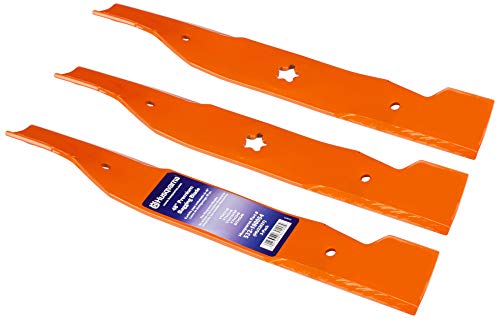
Unlike a traditional push mower that uses a single large blade, a robot mower relies on two to four small, free‑swinging razor blades attached to a spinning disc. The disc rotates at high speed, and the blades are held in place by a central bolt, allowing them to pivot slightly on impact. This design lets the blades cut grass cleanly while reducing the chance of damage if they hit a rock or stick.
The cutting action is purely mulching, there is no grass collection bag. The fine clippings fall back onto the lawn and decompose quickly, returning nitrogen to the soil. Because the mower runs frequently (often daily), the clippings are short enough to not clump, so the lawn stays neat and healthy.
Navigation Methods: How the Mower Knows Where to Cut
To cut the entire lawn, a robot mower must know its boundaries and avoid obstacles. Most models use a perimeter wire installed around the edge of the lawn. The wire emits a low‑voltage signal that the mower detects through a sensor, keeping it inside the cutting area. When the mower reaches the wire, it reverses and turns.
Higher‑end models add GPS, vision cameras, or LiDAR to map the yard and plan efficient routes. These systems allow the mower to navigate complex shapes, avoid flower beds, and return to the charging station without relying solely on a wire. Some models use a combination of random and systematic patterns to ensure full coverage over several days.
Cutting Height Adjustment
You can adjust the cutting height on most robot mowers, either manually by turning a knob or electronically through an app. The range is typically from 20 mm to 60 mm (about 0.8 to 2.4 inches), which suits most home lawns. The cutting height is set before a mowing session and remains constant unless you change it.
Because the mower cuts a small amount of grass each time (usually the top 1‑2 mm), frequent mowing keeps the lawn at the desired height without scalping. If you let the grass grow too long, the mower may struggle to cut it evenly, so consistent scheduling is key.
Mowing Patterns: Random vs. Systematic
Robot mowers use one of two main navigation strategies. Random mowers move in straight lines until they hit an obstacle or boundary, then turn at a random angle. Over several sessions, this random pattern covers the entire lawn, though it may take longer. Systematic mowers follow a planned route, such as a spiral or parallel lines, which can be more efficient and reduce the chance of missed spots.
Many modern mowers combine both approaches: they start with a systematic pattern and switch to random if needed. The result is a lawn that is cut evenly, even if the mower doesn’t follow a visible schedule.
Safety Features That Affect Cutting
Robot mowers include several safety features that stop the blades when they are not on the lawn. Lift sensors detect if the mower is picked up, and tilt sensors stop the blades if the mower tips over. Most models also have a rain sensor that pauses mowing to avoid cutting wet grass, which can clog the blades and leave clumps.
These features ensure that the cutting action only happens when the mower is upright and on the grass, protecting both the mower and any pets or children near the lawn.
Power Source and Battery Impact on Cutting
Robot mowers are battery‑powered, typically using lithium‑ion batteries with voltages ranging from 18V to 36V. The battery determines how long the mower can run before returning to its charging station. Most mowers mow for 60‑90 minutes per charge, which is enough for a medium‑sized lawn. When the battery runs low, the mower automatically docks and recharges, then resumes cutting.
The cutting power is consistent throughout the battery cycle because the blade speed is regulated. However, if the battery is old or the lawn is very thick, the mower may slow down, leading to a less clean cut. Regular battery maintenance helps keep the cutting performance reliable.
How to Ensure Your Robot Mower Cuts Effectively
- Keep the blades sharp and replace them every 2‑3 months for a clean cut.
- Adjust the cutting height to match the grass type and season; avoid cutting more than 1/3 of the leaf blade at once.
- Place the boundary wire correctly so the mower reaches all areas, especially near edges and narrow passages.
- Schedule mowing sessions frequently (daily or every other day) to keep grass short and prevent clumping.
- Clean the mower’s underside regularly to remove grass buildup that can dull the blades.
If you want to dive deeper into choosing the right mower for your yard, our blog covers everything from installation tips to maintenance best practices.
Frequently Asked Questions
Do robot mowers cut grass evenly?
Yes, because they mow frequently and only take off a small amount of grass each time. The fine clippings are evenly distributed, and the mower’s pattern ensures no area is missed over multiple sessions. The result is a consistently cut lawn.
How often should a robot mower run?
Most robot mowers run daily or every other day, depending on grass growth. During peak growing season, daily mowing is best. In slower months, every two days is enough. The mower automatically returns to charge between sessions.
Can a robot mower handle slopes?
Many models can handle slopes up to 20‑25 degrees, but it depends on the design. The mower uses traction and tilt sensors to navigate slopes safely. For very steep lawns, look for a model with high traction wheels and a low center of gravity.
What happens if a robot mower encounters an obstacle?
The mower uses bump sensors, ultrasonic sensors, or collision detection to stop and reverse when it hits an obstacle. Higher‑end models use cameras or LiDAR to avoid obstacles before contact. The blades stop immediately when the mower is lifted or tilted.
Do I need to install a boundary wire?
Most robot mowers require a boundary wire to define the cutting area. The wire is buried or pegged around the edges of the lawn. Some newer models use GPS or virtual boundaries, reducing the need for physical wire. Always check the manufacturer’s requirements.
Related Guides
- How Do Robot Lawn Mowers Find Their Charging Station
- Do Robot Lawn Mowers Collect Grass?
- Best Robot Mower Garage That Does Not Block GPS
Final Thoughts
A robot lawn mower cuts grass by mulching it with small blades while navigating the lawn via boundary wire or sensors. For more detailed guidance on setting up your mower and maintaining your lawn, visit our blog for expert advice.