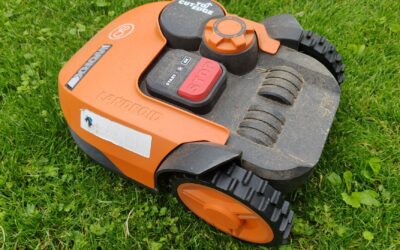
The short answer is yes, many modern robot lawn mowers do have GPS tracking, but it is not a universal feature. GPS is used for navigation, mapping, and theft recovery, though entry-level models often rely on boundary wires or other sensors instead. Understanding how GPS works in these mowers helps you decide whether it matters for your lawn.
How GPS Tracking Works in Robot Lawn Mowers
Robot mowers with GPS use satellite signals to determine their position on your lawn. The most common approach is Real-Time Kinematic (RTK) GPS, which provides centimeter-level accuracy by pairing a base station on your property with the mower. This lets the mower create a precise digital map of your lawn and navigate without a physical boundary wire.
Other mowers use standard GPS for approximate location, often combined with sensors like accelerometers and gyroscopes. This hybrid system helps the mower remember where it has been and avoid mowing the same spot twice. The GPS data is also used to track the mower if it is stolen, though many models require a cellular or Wi-Fi connection to report the location.
Benefits of GPS in Robot Mowers
The biggest advantage of GPS is wire-free installation. You do not need to bury a perimeter wire around your lawn, which saves time and effort, especially on complex or irregularly shaped lawns. GPS also enables efficient mowing patterns, such as straight lines instead of random bouncing, reducing mowing time and battery use.
Theft recovery is another benefit. If your mower is taken, GPS tracking can help locate it, provided the mower has a cellular or Wi-Fi connection. Some models send an alert to your phone if the mower leaves the designated area. This feature adds peace of mind, especially for expensive mowers.
Limitations of GPS Tracking
GPS accuracy can be affected by tall trees, buildings, or heavy cloud cover. While RTK systems are very accurate, they are also more expensive. Standard GPS alone may be off by several feet, which is not precise enough for lawn mowing without additional sensors. This is why many mowers still use a combination of GPS and other navigation methods.
Battery life is another concern. GPS modules consume power, which can reduce the runtime of a robot mower. Additionally, the base station for RTK systems requires a clear view of the sky and a power source, adding complexity to the setup.
Do All Robot Mowers Have GPS?
No, not all robot mowers have GPS tracking. Many budget and mid-range models still use a boundary wire and a simple random or semi-random mowing pattern. These systems are reliable and less expensive, but they lack the mapping and theft features of GPS models. Some manufacturers offer both wire-based and GPS versions of the same mower, so you can choose based on your needs and budget.
If you have a small, simple lawn, a wire-based mower may work perfectly fine. GPS becomes more valuable on larger, complex lawns or if you want the convenience of wire-free installation and theft tracking.
Alternatives to GPS in Robot Mowers
Besides GPS, robot mowers use several other navigation technologies. The most common is a boundary wire that emits a signal the mower detects to stay within the cut area. Some mowers use vision-based systems with cameras to recognize landmarks and borders. Others rely on lidar or ultrasonic sensors for obstacle detection and mapping.
Each method has trade-offs. Vision systems can be confused in low light, while lidar adds cost. Wire systems are reliable but require installation and can be damaged by digging. GPS offers a good balance of convenience and accuracy, but it is not the only option.
How to Decide If You Need GPS Tracking
To decide whether GPS tracking is important for your robot mower, consider your lawn size, shape, and your tolerance for installation work. If you want a wire-free setup and the ability to track the mower if stolen, GPS is worth the extra cost. For a small, simple lawn, a wire-based mower may be more cost-effective.
- Check the mower specifications for GPS type (RTK vs. standard) and whether it requires a base station.
- Verify if the GPS tracking works without a cellular or Wi-Fi connection for theft recovery.
- Consider the terrain: GPS works best in open areas with clear sky views.
- Compare the total cost of a GPS mower versus a wire-based model plus installation time.
If you are still unsure about which navigation technology suits your lawn, reading a detailed guide on how robot mowers handle obstacle detection can help you understand the broader picture. Learn how robot mowers detect obstacles to see how sensors complement GPS or wire systems.
Frequently Asked Questions
Can GPS tracking work without an internet connection?
GPS itself does not require internet; it receives satellite signals. However, to send the location to your phone or to track a stolen mower, the mower typically needs a cellular or Wi-Fi connection. Some models store the location and share it when they reconnect.
Is GPS on a robot mower accurate enough to avoid flower beds?
Standard GPS can be off by several feet, so it is not reliable for precise boundaries. RTK GPS provides centimeter accuracy, making it suitable for complex lawns with flower beds. Without RTK, you still need boundary wires or vision sensors.
Can I add GPS tracking to a robot mower that doesn’t have it?
Retrofitting GPS is usually not possible because the mower’s hardware and software are designed around a specific navigation system. Some aftermarket GPS trackers can be attached physically, but they will not integrate with mowing functions. They can only provide basic location tracking.
Do robot mowers with GPS cost more?
Yes, GPS-equipped robot mowers are generally more expensive than wire-based models, especially those with RTK technology. The added cost covers the GPS module, base station, and often more advanced software. The price difference can range from a few hundred to over a thousand dollars.
Related Guides
- Best ECOVACS Robot Mower Reviews for 2026
- Robot Mower Losing GPS Signal
- How Does GPS Robot Lawn Mower Work
Final Thoughts
Robot lawn mowers with GPS tracking offer convenience, efficiency, and theft protection, but the feature is not essential for every lawn. If you value wire-free installation and precise mapping, a GPS model is a strong choice. For more details on how robot mowers navigate and handle different lawn sizes, check out our guide on how many acres a robot mower can mow.




![Does Robot Mower Need WiFi in Entire Yard? [2026 Guide]](https://robotmowerpicks.com/wp-content/uploads/auto-hero-3782-310ab0c4-400x250.jpg "Does Robot Mower Need WiFi in Entire Yard? [2026 Guide] 9")