
Robot lawn mowers are worth the money for homeowners with smaller, relatively flat lawns who want to reclaim their weekends, but they may not pay off for everyone. The key factors are lawn size, terrain complexity, and how much you value your time. For many, the convenience of hands-off mowing and consistent lawn health justifies the upfront cost, while others with large or irregular yards may find traditional mowers more practical.

Pros
- No perimeter wires required, saving installation time and avoiding tripping hazards.
- Integrated edge trimmer eliminates the need for a separate trimmer for lawn borders.
- Advanced obstacle avoidance keeps the mower safe around people and pets.
- Fast recharge and automatic resume means minimal downtime.
- Accurate mapping works in low light and under trees.
Cons
- High upfront cost compared to wire-based robotic mowers.
- Requires a stable Wi-Fi connection for app features and firmware updates.
- May struggle with very steep slopes or extremely uneven terrain (not specified but typical for such mowers).
The ECOVACS Goat A2000 LiDAR PRO is a high-end robotic lawn mower designed for homeowners with medium-sized lawns up to half an acre. It stands out by eliminating the need for perimeter wires, using dual-LiDAR technology to map and navigate your yard autonomously. This mower is ideal for those who want a premium, hands-free mowing experience with minimal setup.
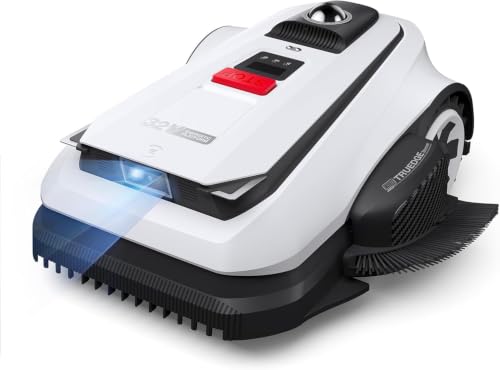
Its dual-LiDAR navigation system, called HoloScope 360, combines a rotating LiDAR with 3D-ToF LiDAR for precise positioning even under trees or at night. The built-in TruEdge string trimmer automatically cuts along borders, reducing manual trimming. The dual-blade cutting system with a 13-inch path handles thick grass efficiently, and the cutting height adjusts electronically via the app.
The mower has a robust white plastic body with dimensions of 30x17x23 inches. It features AIVI 3D obstacle avoidance that recognizes over 200 objects, ensuring safe operation around pets and children. The 32V battery system recharges in about 50 minutes, and the mower resumes unfinished tasks automatically, minimizing downtime.
The main drawback is the price, which is significantly higher than many wire-based competitors. Additionally, the mower relies on a strong Wi-Fi connection for full functionality, which could be an issue in remote areas. The lack of published reviews means long-term reliability is unverified, though ECOVACS is a known brand in robotics.
Overall, the ECOVACS Goat A2000 LiDAR PRO offers cutting-edge navigation and trimming features that justify its premium price for tech-savvy lawn owners. If you want a wire-free, intelligent mower that can handle complex yards with minimal intervention, this is a strong contender. However, budget-conscious buyers may want to consider alternatives.

Pros
- No boundary wires needed, simplifies setup and maintenance.
- Visual navigation effectively avoids obstacles and adapts to lawn layout.
- Adjustable cutting height accommodates various grass types and slope conditions.
- Safety features like tilt and rain sensors prevent accidents and damage.
- Comes with accessories including extra blades and magnetic strip for no-go zones.
Cons
- Random mowing pattern may be less efficient than systematic coverage.
- Magnetic strip length may be insufficient for larger or complex no-go areas.
- Battery life not specified, may require frequent recharging for larger lawns.
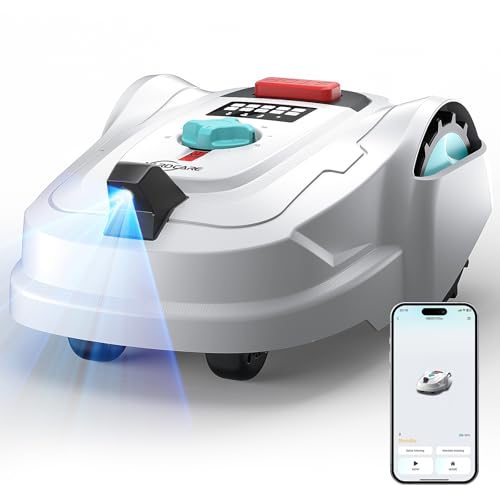
The YARDCARE V100 robot lawn mower is designed for homeowners with small lawns up to 1600 square feet. It stands out with its HD vision system that uses a camera and AI to navigate, avoiding obstacles and distinguishing grass from non-grass areas. This makes it an excellent choice for those who want a hands-off mowing experience without the hassle of laying boundary wires.
In real-world use, the V100's visual navigation is a game-changer. It detects up to 150 different obstacles and adjusts its path after a collision, ensuring thorough coverage. The included 32-foot magnetic strip lets you create no-go zones easily, protecting flower beds or play areas. The random mowing path is effective for routine maintenance, though it may occasionally miss spots that a systematic pattern would cover.
Build quality is solid with an ash gray finish and durable construction. The adjustable cutting height from 0.8 to 2.4 inches and ability to handle slopes up to 20 degrees adds versatility. Safety features like the tilt sensor and rain sensor provide peace of mind, automatically stopping the blades when lifted or in rain. The 4Ah battery is replaceable, extending the mower's lifespan.
Potential drawbacks include the random mowing pattern, which may lead to longer mowing times on complex lawns. The magnetic strip length is adequate for small yards but might need extension for larger no-go areas. Battery runtime is not specified, so users with lawns at the upper size limit may need to recharge mid-cycle.
Overall, the YARDCARE V100 is a reliable, feature-rich robot mower for small lawns. Its wire-free setup and smart navigation make it a top pick for tech-savvy homeowners seeking convenience. While not perfect for large or intricate landscapes, it delivers excellent value for its price point.

Pros
- Wire-free setup saves time and eliminates boundary wire installation
- High precision navigation near trees and buildings for continuous mowing
- Long 200-minute runtime with fast 180-minute charge cycle
- Comprehensive warranty (3-year mower, 2-year battery) for peace of mind
- Quiet operation at 60dB suitable for noise-sensitive areas
Cons
- No user reviews yet to confirm real-world performance and reliability
- Free NetRTK service only during warranty period; subscription may be required afterward
- Initial mapping setup may require careful app-guided configuration for complex yards
The LOPKIN L2500-NEO is a high-tech robotic lawn mower designed for medium-sized yards up to 0.9 acres. It eliminates the need for boundary wires by combining NetRTK, AI vision, and GNSS/INS fusion for accurate navigation. This mower is ideal for tech-savvy homeowners who want a hands-free mowing experience with the freedom to manage multiple zones from their phone.
The standout feature is the Wi-Fi HaLow connectivity, which provides a stable connection over long distances, even through obstacles. The AI vision system can identify and avoid over 300 objects, reducing the risk of collisions with pets, toys, or garden furniture. With a quiet 60dB operation, it won't disturb your outdoor peace.
The mower has an IP66-rated housing, making it dust and water resistant for reliable outdoor use. The adjustable cutting height from 1.18 to 2.76 inches suits different grass types. The 8Ah battery delivers up to 200 minutes of mowing per charge, and the 5A fast charger replenishes it in about 180 minutes.
While the technology is advanced, there are no verified user reviews yet, so long-term reliability is unproven. The free NetRTK service is only included for the warranty period; after that, a subscription may be required. Setting up the mapping for complex lawns might take some patience initially.
Overall, the LOPKIN L2500-NEO offers a compelling package for those seeking a wire-free robotic mower with cutting-edge navigation and obstacle avoidance. Its strong warranty and feature set justify its price. If you are willing to be an early adopter, this mower could simplify your lawn care routine.
The Initial Investment vs. Long-Term Savings
Robot mowers cost anywhere from a few hundred to several thousand dollars, depending on features and brand. That upfront price can be a shock compared to a basic push mower. However, over several years, you save on fuel, maintenance, and your own labor. If you currently pay a lawn service, the robot often pays for itself within two to three seasons.
But the math changes if your lawn is large or heavily sloped. Higher-end models with better navigation and battery life cost more, and you may need multiple units or a more expensive model. Always factor in potential repair costs, too, as robot mowers are complex machines.
Time Saved: What Is Your Weekend Worth?
The biggest selling point is freedom from mowing. A robot mower handles the chore automatically, often daily or every few days, so you never have to push a mower again. For someone who dreads the weekly mow, that time savings is huge. Even a half-acre lawn can take an hour or more per week, adding up to dozens of hours over a growing season.
But the robot still needs occasional attention: clearing debris, cleaning blades, and checking the boundary wire. It’s not entirely hands-off, but it’s far less time than traditional mowing. If you enjoy mowing as exercise or relaxation, the robot might feel like an unnecessary expense.
Lawn Quality and Consistency
Robot mowers cut grass using a mulching action, clipping small bits that decompose quickly and return nutrients to the soil. This promotes a healthier, greener lawn compared to traditional bagging or side-discharge mowing. Because the robot mows more frequently, it never removes too much leaf blade at once, reducing stress on the grass.
The result is often a more uniform, manicured appearance. However, robots struggle with tall or wet grass, and they can leave uncut patches if the lawn has complex obstacles. For most average lawns, though, the quality improvement is noticeable within a few weeks.
Installation and Setup Considerations
Most robot mowers require a boundary wire to define the mowing area. Installing that wire around flower beds, trees, and other obstacles takes time and careful planning. Some models offer wire-free navigation using GPS or camera systems, but they cost more and may still need setup calibration.
If your lawn is simply shaped with clear borders, installation is straightforward. For complex gardens with multiple zones, you may need professional help, adding to the total cost. The effort of installation is a one-time task, but it’s a factor worth weighing before you buy.
Maintenance and Battery Life
Robot mowers require regular maintenance: cleaning the underside, sharpening or replacing blades, and checking the charging contacts. The battery is a consumable that typically lasts three to five years before replacement is needed. Replacement batteries can cost a significant portion of the original unit price.
If you’re not comfortable with basic maintenance, the robot might feel like a hassle. But for most owners, the weekly effort is minimal compared to a traditional mower. The key is to factor in long-term battery and blade costs when evaluating overall value.
Terrain and Lawn Size Limitations
Robot mowers work best on lawns under one acre that are relatively flat. Steep slopes, narrow passages, and irregular shapes can confuse the navigation system and cause the robot to get stuck. Many models have a maximum slope rating, usually around 15 to 25 degrees, which limits where they can operate.
If your lawn is larger than an acre, you may need a more expensive model with a larger battery or multiple units. For very large properties, a traditional zero-turn mower might still be more cost-effective. Always check the specific terrain requirements before committing.
Weather and Seasonal Performance
Most robot mowers are designed to handle light rain, but they will return to the charging station if the rain gets heavy. They also have a rain sensor that prevents mowing when the grass is wet to avoid damage. In winter, you’ll need to store the robot indoors, as they are not designed for snow or freezing temperatures.
If you live in an area with a long growing season, the robot will be useful for many months. In colder climates, the payback period stretches out because the mower is idle for part of the year. Consider your local climate when evaluating whether the robot is worth the investment.
How to Decide If a Robot Lawn Mower Is Worth It for You
- Measure your lawn area and note its shape and slope.
- Calculate your current mowing time and value it at your hourly rate.
- Compare the total cost of a robot mower (including installation and maintenance) against your current costs over three to five years.
- Check the robot’s maximum slope and obstacle-handling capability against your lawn’s features.
- Read reviews from owners with similar lawn sizes and conditions.
Once you have those answers, you’ll know whether a robot mower is a smart buy. For a step-by-step guide on measuring your lawn accurately, see calculating your lawn size accurately. That information is essential to estimating the right robot model and whether it will pay off.
Frequently Asked Questions
How long do robot lawn mowers last?
A well-maintained robot mower typically lasts 5 to 8 years. The battery is the most likely component to fail, usually needing replacement after 3 to 5 years. Replacing the battery is often cheaper than buying a new unit.
Do robot mowers work on slopes?
Most robot mowers handle slopes up to about 15 to 25 degrees, depending on the model. Steeper slopes may cause the mower to slip or lose traction. Always check the manufacturer’s slope rating and test on your own terrain.
Can robot mowers handle rain?
Robot mowers are weather-resistant and can mow in light rain. However, they have rain sensors that send them back to the charging station during heavy rain. Mowing wet grass is not recommended, as it can clog the blades and damage the lawn.
Are robot lawn mowers safe for pets?
Yes, robot mowers are safe for pets. They have obstacle detection sensors that stop the blades when they encounter an object. The blades are small and dull enough to cause only minor injury, but the mower’s sensors usually prevent contact.
How much does a robot mower increase home value?
Robot mowers are not a major home value booster compared to features like a renovated kitchen. They are a convenience item that may appeal to tech-savvy buyers, but they don’t add significant resale value. Consider them a lifestyle upgrade, not an investment.
Related Guides
- Best ECOVACS Robot Mower Reviews for 2026
- Robot Mower Losing GPS Signal
- How Does GPS Robot Lawn Mower Work
Final Thoughts
Robot lawn mowers are worth the money if your lawn is a good fit and you value the time they save. They aren’t a universal solution, but for many homeowners, the convenience and consistent lawn quality make them a smart purchase. To see if your lawn size is within range, check out our guide to how many acres a robot mower can handle.