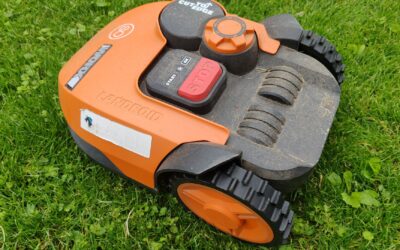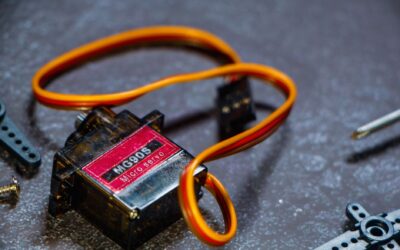
Robot mowers use very little electricity, typically between 50 and 200 watt-hours per charge cycle, which costs only a few dollars per year for most lawns. The exact amount depends on your mower’s battery size, your lawn’s area, and how often you mow. To put it in perspective, running a robot mower consumes about as much power as a modern LED light bulb left on for a few hours each day. That makes it one of the most energy-efficient lawn care options available.

Pros
- No perimeter wires required, saving installation time and avoiding tripping hazards.
- Integrated edge trimmer eliminates the need for a separate trimmer for lawn borders.
- Advanced obstacle avoidance keeps the mower safe around people and pets.
- Fast recharge and automatic resume means minimal downtime.
- Accurate mapping works in low light and under trees.
Cons
- High upfront cost compared to wire-based robotic mowers.
- Requires a stable Wi-Fi connection for app features and firmware updates.
- May struggle with very steep slopes or extremely uneven terrain (not specified but typical for such mowers).
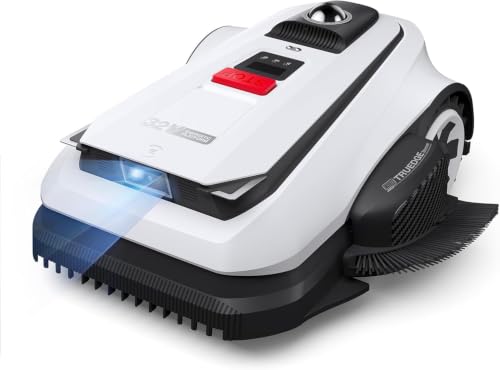
The ECOVACS Goat A2000 LiDAR PRO is a high-end robotic lawn mower designed for homeowners with medium-sized lawns up to half an acre. It stands out by eliminating the need for perimeter wires, using dual-LiDAR technology to map and navigate your yard autonomously. This mower is ideal for those who want a premium, hands-free mowing experience with minimal setup.
Its dual-LiDAR navigation system, called HoloScope 360, combines a rotating LiDAR with 3D-ToF LiDAR for precise positioning even under trees or at night. The built-in TruEdge string trimmer automatically cuts along borders, reducing manual trimming. The dual-blade cutting system with a 13-inch path handles thick grass efficiently, and the cutting height adjusts electronically via the app.
The mower has a robust white plastic body with dimensions of 30x17x23 inches. It features AIVI 3D obstacle avoidance that recognizes over 200 objects, ensuring safe operation around pets and children. The 32V battery system recharges in about 50 minutes, and the mower resumes unfinished tasks automatically, minimizing downtime.
The main drawback is the price, which is significantly higher than many wire-based competitors. Additionally, the mower relies on a strong Wi-Fi connection for full functionality, which could be an issue in remote areas. The lack of published reviews means long-term reliability is unverified, though ECOVACS is a known brand in robotics.
Overall, the ECOVACS Goat A2000 LiDAR PRO offers cutting-edge navigation and trimming features that justify its premium price for tech-savvy lawn owners. If you want a wire-free, intelligent mower that can handle complex yards with minimal intervention, this is a strong contender. However, budget-conscious buyers may want to consider alternatives.

Pros
- Tailored fit for LUBA 2 AWD and LUBA 3 ensures hassle-free use.
- All-weather protection keeps mower and charger safe from elements.
- Side entry avoids obstruction and simplifies docking.
- Sturdy build quality resists wind and wear.
- Covers entire charging station, not just the mower.
Cons
- No customer reviews yet to confirm real-world durability.
- May be bulky for small yards or tight storage spaces.
- Only compatible with specific Mammotion models, not universal mowers.
The YBBSHMYY Robotic Mower Garage is a dedicated shelter designed for Mammotion LUBA 2 AWD and LUBA 3 robotic mowers. It is ideal for owners who want to protect their investment from harsh weather and prolong the life of both the mower and its charging station.
Standout features include weatherproof construction that shields against rain, sun, wind, and snow, plus a side-entry design that allows the mower to dock and undock smoothly without manual intervention. The garage fully encloses the charging station, keeping electrical contacts dry and ready for the next mowing session.
Build quality is solid with robust materials that withstand outdoor conditions. The dimensions (36x36x24 inches) and 11-pound weight make it easy to place and secure in most yards. Assembly is straightforward, and the black+white color scheme blends well with typical outdoor surroundings.
Potential drawbacks include a lack of verified customer reviews, as this product has no ratings yet. Additionally, its specific compatibility means it won't work with other robotic mower brands. The size may also be a consideration for those with limited space.
Overall, the YBBSHMYY Garage offers targeted protection for Mammotion LUBA 2 AWD and LUBA 3 owners. If you own one of these mowers and want to extend its lifespan, this is a practical, well-designed accessory worth considering.
Color: Black+White
Dimensions: 36 x 36 x 24 inches
Weight: 11 pounds
Compatibility: Mammotion LUBA 2 AWD, LUBA 3
Material: Durable weatherproof fabric and frame
Design: Side entry with full charging station coverage
Battery Capacity and Voltage
The single biggest factor in electricity use is your robot mower’s battery. Most models use lithium-ion batteries with capacities ranging from 2,000 to 5,000 mAh (milliamp-hours) at voltages between 18V and 36V. A higher capacity battery stores more energy, so it uses more electricity to charge fully, but it also allows longer mowing sessions.
For example, a 2,000 mAh battery at 18V holds about 36 watt-hours of energy. Charging it from empty to full consumes roughly 40 to 45 watt-hours due to charging losses. Over a season, that adds up, but the total remains modest.
Lawn Size and Mowing Frequency
Your lawn’s area directly determines how many charge cycles your mower completes per week. A small lawn of 0.25 acres might require only one charge every few days, while a 1-acre lawn could need daily charging during peak growth. Each charge cycle draws the same amount of electricity regardless of how long the mower runs, because the battery is always fully recharged.
If you mow more frequently, you increase the number of cycles. That said, robot mowers are designed for frequent light cuts, so the total energy use still stays low. For most homeowners, the annual electricity cost ranges from $5 to $20, depending on local rates.
Terrain and Grass Conditions
Thick, wet grass or steep slopes force the mower to work harder, draining the battery faster. This means the mower returns to the charging station sooner and needs more frequent recharges. While the electricity per charge remains the same, the extra cycles increase total consumption.
Similarly, a mower that struggles with uneven terrain may spend more time maneuvering, which also uses power. Keeping your grass at a moderate height and avoiding mowing in heavy rain can help reduce unnecessary battery drain and keep energy use in check.
Charging Efficiency and Standby Power
Not all the electricity from your wall outlet reaches the battery. Charging circuits typically operate at 85% to 95% efficiency, meaning 5% to 15% is lost as heat. Additionally, the charging station itself draws a small amount of standby power when the mower is docked but not charging. This standby draw is usually less than 5 watts, which adds only a few cents per month.
Over a year, standby losses might total 1 to 2 kWh, or about $0.15 to $0.30. It’s negligible, but if you want to minimize it, you can unplug the station during long periods of non-use, such as winter storage.
How to Estimate Your Electricity Cost
To get a personalized estimate, start by noting your mower’s battery capacity in watt-hours (Wh). Multiply that by the number of full charge cycles per month, then multiply by your electricity rate per kWh (divide by 1,000 to convert Wh to kWh). For example, a 40 Wh battery charged 30 times per month uses 1.2 kWh, which at $0.12 per kWh costs about $0.14 per month.
Many manufacturers provide energy specs in the user manual. If not, you can use a plug-in power meter to measure actual consumption over a week. That gives you the most accurate figure for your specific setup.
How to Reduce Electricity Usage
- Check your mower’s battery specs and compare them to your lawn size to avoid an oversized model that cycles more often than needed.
- Adjust mowing frequency to match grass growth rate; you don’t need to mow daily during slow seasons.
- Keep blades sharp and the mower clean to reduce drag and improve efficiency.
- Use the mower’s scheduling feature to avoid charging during peak electricity rate hours if your utility has time-of-use pricing.
- Unplug the charging station when the mower is stored for winter to eliminate standby draw.
If you’re unsure what size mower fits your lawn, our guide on what size robot mower you need can help you choose an efficient model that matches your property’s demands. Pairing the right mower with smart scheduling is the best way to keep electricity costs minimal.
Related Guides
- Best ECOVACS Robot Mower Reviews for 2026
- Robot Mower Losing GPS Signal
- How Does GPS Robot Lawn Mower Work
Frequently Asked Questions
Does a robot mower use electricity when it’s not mowing?
Yes, the charging station draws a small amount of standby power, typically under 5 watts, even when the mower is fully charged and docked. This adds up to a few cents per month. Some models have an eco mode that reduces standby draw further.
How much does it cost to charge a robot mower per month?
For an average lawn, monthly charging costs range from $0.50 to $2.00, depending on your electricity rate and how often the mower runs. That’s about the same as powering a small nightlight continuously.
Can I run a robot mower on solar power?
Yes, you can connect the charging station to a small solar panel and battery system, but the station’s power draw is so low that the payback period is very long. Most homeowners find it more practical to simply plug into a standard outlet.
Does mowing on a slope use more electricity?
Yes, slopes and uneven terrain increase the mower’s motor load, draining the battery faster. This means more frequent charging cycles, which raises total electricity consumption slightly. It’s a small effect for most yards.
How does robot mower electricity use compare to a gas mower?
A gas mower consumes about 0.5 to 1 gallon of fuel per hour, costing several dollars per use. A robot mower uses only a few cents per session, making it far more energy-efficient and cheaper to operate over a season.
Robot mowers are an incredibly energy-efficient choice for lawn care, with annual electricity costs usually under $20. If you’re still deciding on a mower, our guide on how many acres a robot mower can mow can help you match a model to your lawn size for optimal efficiency.